29 Aug
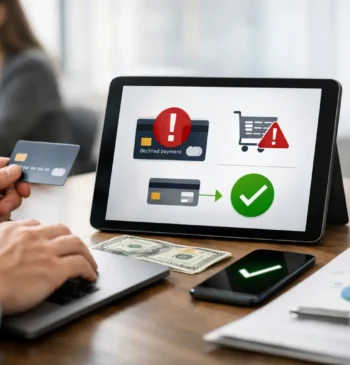
A payment decline is rarely just a failed transaction. For an online merchant, it may mean a lost customer, an interrupted subscription or a chargeback risk that surfaces weeks later. The choice between PSP orchestration versus single acquirer directly affects how much control a business has when those moments occur.
A single-acquirer model can be efficient, cost-effective and entirely appropriate for a merchant with a focused market and predictable transaction profile. Payment orchestration becomes more compelling when approval rates, geographic coverage, business continuity and risk management need to be actively managed across several providers. The right decision depends on your operating model, not simply the size of your payment stack.
What a single-acquirer model does well
In a single-acquirer arrangement, card transactions are processed through one acquiring bank or acquiring partner. The merchant may still use a payment gateway and accept several card schemes or payment methods, but card routing follows one principal acquiring relationship.
This approach has clear advantages. Commercial terms are easier to understand, settlement and reconciliation are more straightforward, and technical integration can be completed quickly. For a domestic retailer, a new online business or a merchant with modest and stable volumes, one acquirer can provide the acceptance capability needed without adding unnecessary operational layers.
A single acquirer may also offer valuable sector knowledge. If the acquirer understands a merchant’s business model, transaction profile and compliance obligations, it can support a well-configured payment programme with sensible fraud rules and reliable settlement.
The limitation is concentration. If an issuer declines a transaction because of a route-specific issue, if an acquiring programme changes its risk appetite, or if a technical disruption affects processing, the merchant has limited room to respond. Every payment outcome is tied to one acquiring decision path.
That concentration can become commercially significant in sectors with cross-border demand, recurring billing, higher fraud exposure or changing issuer behaviour. Gambling, travel, subscriptions, telecoms, dating and other regulated or high-risk categories often need more than one route to maintain consistent acceptance.
PSP orchestration versus single acquirer: the practical difference
Payment orchestration sits above individual payment service providers, acquirers and alternative payment methods. It provides a central layer through which a merchant can connect, configure and manage multiple payment partners without building a separate checkout integration for each one.
Rather than sending every eligible card payment to one acquirer, an orchestration platform can apply routing logic based on factors such as card type, issuing country, currency, transaction value, merchant entity, historical performance or current processor availability. The merchant defines the commercial and risk rules, while the platform executes them in real time.
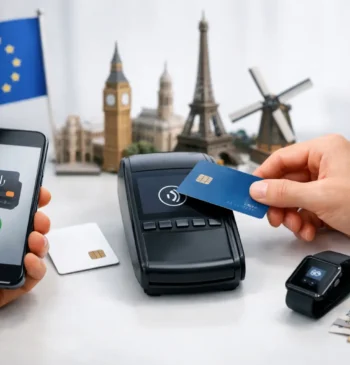
For example, a UK-based subscription business selling across Europe may find that one acquirer performs strongly for domestic debit cards while another has better approval rates for particular European-issued cards. With orchestration, routing can be set to favour the stronger path for each eligible transaction. If a soft decline occurs, carefully controlled cascading can attempt the transaction through an alternative approved route where permitted.
This is not about sending every transaction through a complex maze of providers. Good orchestration is disciplined. It uses data, issuer response codes and predefined rules to reduce avoidable declines while protecting the customer experience and maintaining compliance.
Approval rates are a routing question, not only an acquirer question
Many merchants review approval rates as a single headline figure. That view can conceal the real cause of lost revenue. An approval rate may vary materially by issuer country, card scheme, currency, payment method, customer segment, transaction type and time of day.
With one acquirer, the main options are to improve fraud settings, refine descriptor information, optimise 3D Secure configuration and work with the acquirer on performance. These measures matter and should be part of every payment strategy. However, they do not remove the constraints of a single processing route.
Orchestration adds another lever: intelligent routing. It lets payment teams compare performance across partners and direct eligible traffic towards the route delivering stronger authorisation outcomes. It also supports merchant-level controls, so high-value payments, recurring transactions or particular markets can follow the route most suited to their characteristics.
The commercial gain is not merely a higher percentage on a dashboard. It is more successful checkouts, fewer failed renewals and less acquisition spend wasted on customers who were ready to pay.
Resilience matters when payment acceptance is business-critical
Every payments business needs a plan for service disruption. A gateway incident, acquirer outage, scheme issue or sudden underwriting restriction can interrupt revenue immediately. For merchants processing high volumes or running time-sensitive campaigns, even a short period of reduced acceptance can have a measurable impact.
A single acquirer simplifies day-to-day operations, but it leaves no alternative card-processing route if that provider becomes unavailable. Manual intervention may be too slow, particularly outside office hours or during peak demand.
An orchestrated model can provide controlled failover to a secondary acquirer or PSP. The key word is controlled. Failover rules should take account of payment method, customer geography, risk settings and the reason for failure. Routing a payment repeatedly after a hard decline is unlikely to improve conversion and may create unnecessary issuer concern. A well-designed setup distinguishes technical failures and eligible soft declines from genuine refusals.
For regulated and high-risk merchants, resilience also includes acquiring continuity. A change in one acquirer’s sector appetite should not automatically force a business to rebuild its entire payment operation. Multiple acquiring relationships, managed through one platform, create more options.
The operational trade-off: more capability requires governance
Orchestration is not automatically the right answer. Adding acquirers, PSPs and payment methods introduces more contracts, settlement files, risk parameters and reporting requirements. Without a clear operating model, a multi-provider setup can become harder to manage than the problem it was meant to solve.
Merchants should assess whether they have the data and expertise to govern routing effectively. That includes monitoring approval rates by segment, reviewing fraud and chargeback outcomes, reconciling settlements, testing routing changes and maintaining accurate payment method configurations.
The technology provider matters here. A central platform should reduce operational complexity through unified reporting, API-led integrations, token management, hosted payment fields, webhooks and configurable routing rules. It should not merely place another interface between the merchant and its providers.
At AllSecure, orchestration is designed to combine gateway capability, acquiring access and risk controls in one payment infrastructure. This is especially relevant where merchants need to add providers or enter markets without continually rebuilding their checkout experience.
When a single acquirer is the better choice
A single acquirer remains a sensible choice when the merchant operates in one core market, has limited payment complexity and receives reliable approval performance. It can also be appropriate during an early launch, where speed to market and straightforward reconciliation are more valuable than advanced routing.
The important point is to avoid mistaking simplicity for strategy. A merchant can begin with one acquirer while ensuring its gateway and integration architecture will support additional providers later. This preserves flexibility without imposing unnecessary cost or administration from day one.
Before choosing, examine where revenue is coming from, which payments are failing and how expensive an interruption would be. If international growth, recurring transactions or sector-specific acquiring risk are central to the plan, building optionality early is usually prudent.
Designing a payment model around your business
The best payment architecture starts with transaction data and commercial priorities. Review approval rates by market and issuer, assess fraud and chargeback patterns, identify payment methods customers expect, and map the consequences of an acquirer outage. Then decide whether the gains from multi-provider routing outweigh the additional governance required.
For some merchants, the answer will be one well-supported acquirer with excellent gateway configuration. For others, it will be an orchestrated network of acquirers and PSPs, with routing rules that adapt to market, payment type and performance.
Payment acceptance should not be a fixed constraint on growth. Build a model that gives your team the control to protect revenue when conditions change.
Related Articles