01 Aug
A customer reaches checkout, enters their card details and expects an answer in seconds. Behind that simple moment, a cross-border merchant may need to select the right acquirer, apply fraud checks, support local payment preferences and protect sensitive data. So, how does payment orchestration work when every transaction carries different commercial and risk requirements? It uses a central payment layer to make those decisions intelligently, without forcing a merchant to build and maintain separate integrations for every provider.
For businesses operating across markets, payment orchestration is not simply a technical convenience. It is a way to turn payment acceptance into a controlled commercial function – one that can improve approvals, limit avoidable declines, reduce operational dependency on a single provider and give teams clearer oversight of payment performance.
What payment orchestration does
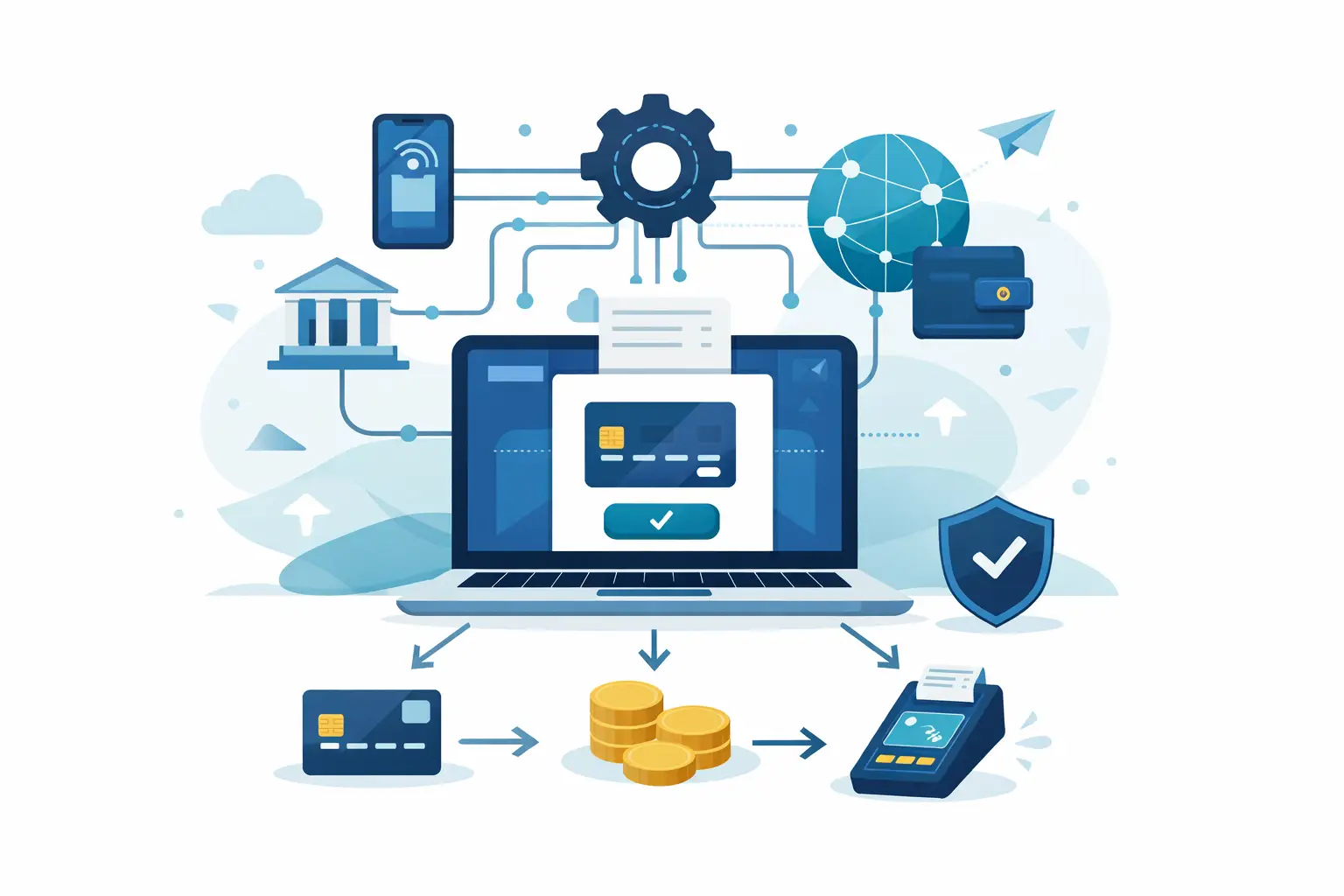
Payment orchestration connects a merchant’s checkout, payment service providers, acquirers, fraud tools, token services and alternative payment methods through one integration and a single control layer. Rather than sending every transaction to one processor by default, the orchestration platform can evaluate the transaction and route it according to rules set by the merchant.
Those rules can reflect the customer’s country, transaction currency, payment method, issuer behaviour, transaction value, risk score, product type or the performance of each acquiring route. A UK cardholder paying in pounds, for example, may be sent to a different acquirer from a customer using a local wallet in another European market. The goal is not to add complexity to checkout. It is to place complexity behind the checkout, where it can be managed centrally.
This approach matters especially for merchants with multiple entities, international customer bases, recurring payments or regulated and higher-risk business models. A single acquirer may be appropriate for a smaller, domestic operation. At scale, relying on one route can expose revenue to downtime, changing risk appetite, local acceptance gaps and inconsistent approval performance.
How does payment orchestration work step by step?
The process begins when the customer selects a payment method. The checkout collects payment information through hosted fields, a hosted payment page or an API-led integration. Sensitive card data should be handled within a PCI DSS-compliant environment, reducing the merchant’s exposure while maintaining control over the checkout experience.
The orchestration layer then receives the payment request and enriches it with useful context. This can include the billing and delivery country, customer device data, currency, merchant entity, transaction history, subscription status and fraud-screening results. For card payments, it may also manage network tokenisation and initiate 3D Secure v2 when required by regulation, issuer preference or the merchant’s risk policy.
Next comes routing. The platform applies the merchant’s routing logic to determine which connected provider or acquirer should receive the authorisation request. Rules may be fixed, such as sending transactions for a particular market to a designated local acquirer. More advanced configurations use performance data, shifting traffic towards routes that are achieving stronger approval rates for a given card scheme, issuer country or transaction type.
The selected provider submits the transaction through the relevant card network or payment method rail. The issuer or payment provider approves, declines or requests additional authentication. The result returns to the orchestration layer, which passes the appropriate response back to the checkout and records the transaction against a central payment record.
Where a payment fails, the platform can apply carefully configured fallback logic. It might try a secondary acquirer, offer another payment method or schedule a retry for a recurring payment. This must be managed with discipline. Retrying every decline through several acquirers can create duplicate authorisations, higher costs and a poor issuer reputation. Effective orchestration distinguishes between technical failures, soft declines, insufficient funds and hard declines, then responds differently to each.
Intelligent routing is where commercial value is created
Routing is often described as sending payments to the best provider. In reality, “best” depends on the transaction and the merchant’s priorities. The lowest processing fee is not always the most profitable route if it delivers weak approvals. Equally, an acquirer with excellent acceptance in one country may not be the strongest choice for another market or for a particular vertical.
A well-designed routing strategy balances approval performance, cost, settlement currency, fraud exposure, dispute ratios and processing capacity. It also considers the acquiring agreements available to the merchant. In sectors such as gaming, travel, adult, dating, telecoms and subscriptions, acquiring relationships are often as important as technology. The orchestration platform provides the flexibility to use approved routes appropriately, but it cannot replace sound underwriting or a sustainable risk profile.
Merchants should start with clear routing rules and then test against live performance data. For example, a business may prioritise a domestic acquirer for local cards, route higher-value transactions to a provider with stronger risk controls and reserve a secondary route for technical outages. As transaction volumes grow, this can evolve into performance-based routing with guardrails to prevent sudden or excessive traffic changes.
Payment orchestration and fraud management must work together
Approval rate is valuable only when it represents good revenue. A payment strategy that approves more fraudulent transactions will eventually increase chargebacks, monitoring risk and acquiring pressure. Payment orchestration should therefore work alongside fraud prevention, not against it.
The orchestration layer can pass fraud scores and transaction attributes to routing rules. A low-risk returning customer may follow a fast, low-friction path, while a higher-risk transaction may require 3D Secure, additional checks or a route with a risk profile suited to that category. It can also ensure that device data, authentication results and transaction identifiers travel consistently between systems.
This coordination is particularly useful when merchants operate more than one PSP or fraud tool. Without a central layer, teams can end up with separate rules, fragmented transaction histories and limited visibility of why customers are being declined. Centralised controls make it easier to identify whether a decline is driven by issuer response, fraud policy, acquirer configuration or an integration issue.
The operational benefits extend beyond checkout
A payment orchestration platform creates a consolidated view of transactions across providers. Finance teams can reconcile settlements more efficiently when transaction references, statuses and payment events are standardised. Operations teams can monitor provider availability, dispute trends and approval-rate changes without pulling reports from multiple portals. Product and technical teams can introduce a new payment method or acquirer with less development work than a new end-to-end checkout integration.
Webhooks and reporting are central to this model. A merchant needs reliable, real-time status updates for authorisations, captures, refunds, chargebacks and recurring-payment events. The platform should also support the payment lifecycle after the initial authorisation, including partial captures, voids, refunds, token updates and subscription rebilling.
There is a practical limit to centralisation. Different acquirers and payment methods have different capabilities, response codes and settlement processes. A strong orchestration setup standardises what it can, while preserving the provider-specific information teams need to diagnose performance and manage exceptions.
What to look for before implementing orchestration
The right solution depends on your payment estate. A merchant using one acquirer in one market may gain more from strengthening fraud controls or adding local methods first. Orchestration becomes more compelling when payment volumes, territories, entities or provider relationships make direct integrations difficult to govern.
Assess the depth of the provider network, the quality of acquiring access, PCI DSS scope, token portability, routing controls, alternative payment method coverage and reporting detail. Ask how the platform handles 3D Secure, retries, outages, recurring billing and dispute data. Most importantly, establish who will help configure the payment strategy. Technology can execute rules at speed, but the rules need commercial and risk expertise behind them.
AllSecure combines gateway infrastructure, acquiring access and configurable orchestration to help merchants build payment flows around their markets, risk requirements and growth plans. That hands-on approach is valuable when a standard routing template is not enough.
The best next step is to map your current payment journey: where customers are declined, where teams rely on manual work and where a single provider represents unnecessary exposure. Those points reveal whether orchestration should begin with a targeted routing improvement or a broader redesign of your payment operation.
Related Articles