13 Nov
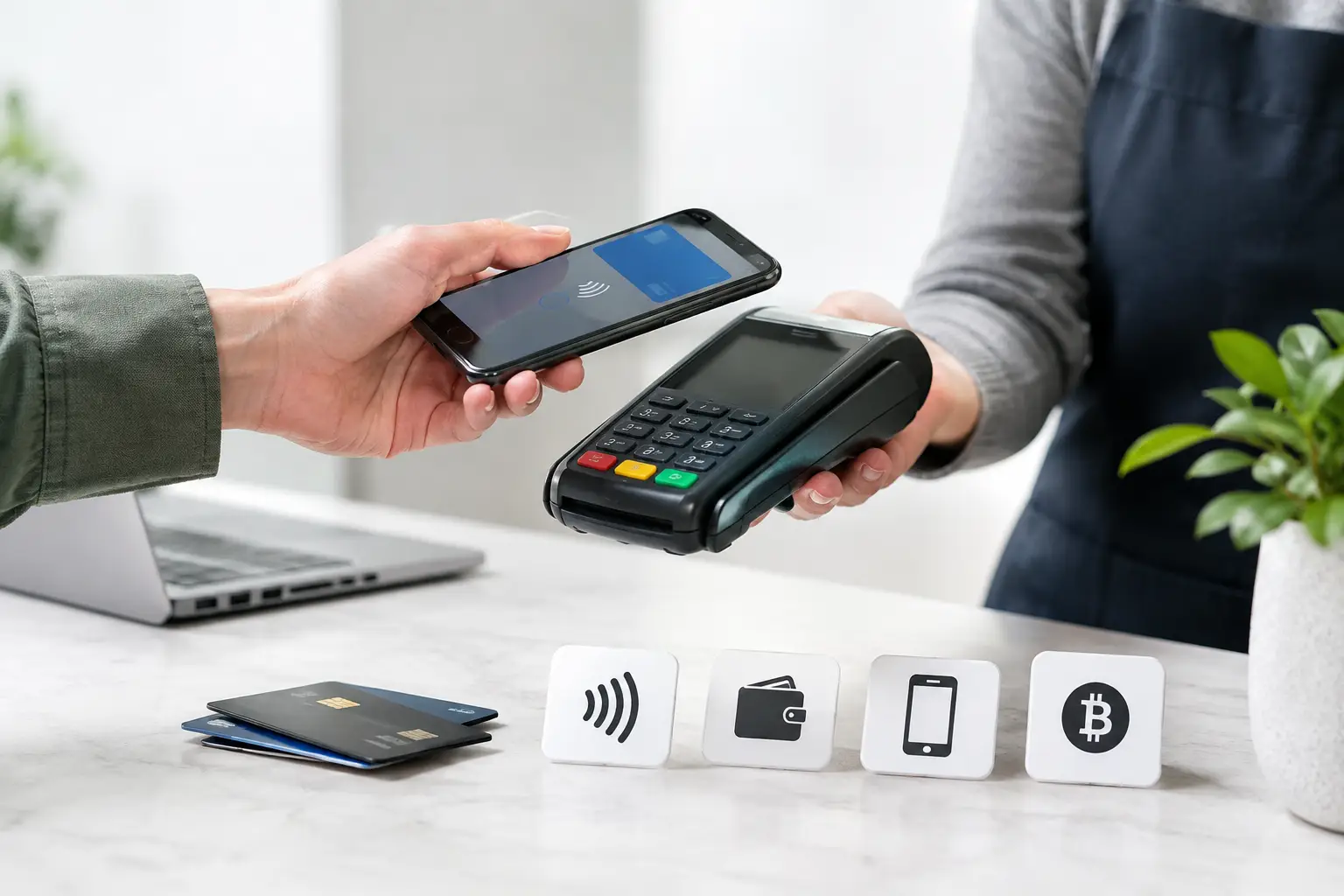
A card decline at checkout is not always a lost sale. In many cases, it is a signal that the customer expects a different way to pay. The top alternative payment methods give online merchants more than a back-up to card processing: used selectively, they can improve checkout conversion, support local market entry and reduce dependence on a single acquiring route.
For merchants in travel, subscriptions, gaming, telecoms, digital services and regulated higher-risk sectors, the question is not whether alternative payment methods should replace cards. Cards remain central to online commerce. The commercial question is which methods solve a real payment acceptance problem for a particular customer, market and transaction type.
What counts as an alternative payment method?
Alternative payment methods, often shortened to APMs, are payment options outside traditional card entry at checkout. They include digital wallets, account-to-account bank payments, direct debit, prepaid and cash-based vouchers, carrier billing and local payment schemes. Some are global; others are highly specific to one country or region.
They vary significantly in how they authorise transactions, settle funds, handle refunds and support recurring payments. That difference matters. A method that performs well for a one-off digital purchase may be unsuitable for a hotel booking made months ahead, while a recurring bank debit can be valuable for a subscription business but does not provide the instant confirmation expected for all products.
The strongest payment mix is therefore designed around payment behaviour, risk exposure and operational requirements, rather than around a long list of logos at checkout.
Top alternative payment methods to assess
Digital wallets
Digital wallets allow customers to pay using credentials stored on a mobile device or wallet account. At checkout, the customer usually authenticates with a device passcode or biometric approval rather than manually entering card details.
For merchants, the primary benefit is lower checkout friction. Wallets can be particularly effective on mobile, where typing a full card number, billing address and security code creates avoidable abandonment. They may also reduce the exposure of sensitive card data within the merchant environment, depending on the integration model.
Wallets are not automatically the right answer for every market. Adoption differs by country, customer age group and device ecosystem. Merchants should also assess how wallet transactions are routed, whether network tokenisation is supported, and how wallet data appears in fraud screening and chargeback workflows.
Account-to-account and open banking payments
Account-to-account payments move funds directly from the customer’s bank account, commonly through a bank authentication journey. In Europe, open banking has expanded the availability of these payment flows, especially for immediate one-off payments.
This method can be commercially attractive where merchants want an alternative to card rails, particularly for higher-value deposits, invoices or account top-ups. It can also appeal to customers who prefer not to use a card online. Confirmation speed depends on the bank connection and payment scheme, so merchants should distinguish carefully between payment initiation, confirmation and final settlement.
Account-to-account payments have limitations. Recurring use cases, refunds, dispute handling and user experience are not identical to card payments. A merchant should not assume that a bank payment will replace card-on-file billing for subscriptions without reviewing the full customer lifecycle.
Direct debit for recurring revenue
Direct debit is built for repeat collection from a customer’s bank account and is relevant to subscription services, memberships, telecoms and other predictable billing models. Once the appropriate mandate is in place, it can reduce the need for customers to update expired or replaced card details.
The operational trade-off is timing and risk management. Direct debit collection is not an instant-authorisation product in the same way as a card transaction, and payer protections can allow reversals in defined circumstances. Merchants need clear mandate records, sensible service activation rules and a recovery process for failed collections.
Used alongside card recurring billing rather than as a wholesale replacement, direct debit can give customers a practical choice and make revenue collection less dependent on card expiry cycles.
Local bank transfer schemes
Many markets have established bank-based payment systems that consumers recognise and trust. These can be accessed through local bank applications, online banking redirects or account identifiers. For cross-border merchants, these methods may be decisive in markets where card use is lower or where domestic payment schemes dominate online purchasing behaviour.
A local bank transfer method is most valuable when it is supported by the merchant’s target audience, not simply because it is available through a provider. Consider average transaction value, customer journey, settlement currency, refund mechanics and whether the method supplies a reliable success callback before goods or services are delivered.
For travel and hospitality businesses, for example, payment timing must be matched to booking and cancellation policies. For digital goods, immediate confirmation and fraud controls may carry greater weight.
Prepaid, voucher and cash-based payment options
Prepaid and voucher-based methods let customers pay without presenting a conventional credit or debit card. Depending on the market, customers may obtain vouchers through retail locations or fund prepaid accounts before transacting online.
These methods can broaden reach among customers who do not wish to use cards, have limited access to card products or want tighter spending control. They can also be relevant for digital services and regulated industries where customer payment preferences differ from mainstream retail.
Their constraints are equally clear. Voucher journeys can involve extra customer steps, transaction limits may apply, and refunds can be more complex than card refunds. Merchants should make refund terms visible before payment and ensure customer support teams understand the method-specific process.
Carrier billing
Carrier billing places a charge on a customer’s mobile phone bill or deducts it from prepaid mobile credit. It can suit low-value digital content, gaming purchases and selected telecommunications services, especially where mobile usage is high and customers do not want to enter payment details.
It is generally less suitable for high-ticket sales or long-term recurring commitments because of cost structures, transaction limits and customer dispute considerations. A merchant should treat carrier billing as a targeted conversion tool, not a universal payment option.
Buy now, pay later
Buy now, pay later arrangements allow eligible customers to spread payments under a provider’s credit model. For merchants selling higher-value discretionary products, it can reduce the immediate cost barrier at checkout.
However, availability, merchant category acceptance and regulatory expectations vary. It may have limited relevance for certain digital, subscription or higher-risk sectors. Merchants should also consider whether a deferred-payment option fits their refund, fulfilment and customer affordability policies before adding it to checkout.
Choose methods by payment problem, not popularity
Adding every available option can make checkout confusing, complicate reconciliation and create additional fraud monitoring work. The better approach is to start with evidence: declined card reasons, abandonment by device, conversion by country, customer service requests and the payment methods customers already use in priority markets.
A subscription platform with involuntary churn from expired cards may prioritise network tokenisation, card account updating and direct debit. A gaming operator entering a card-light market may need local bank payments and prepaid options. An international travel merchant may focus on wallets for mobile conversion, local schemes for destination markets and payment flows that work with delayed fulfilment.
The method itself is only one part of the result. Checkout placement, currency presentation, authentication design, fraud rules and acquiring connectivity all influence whether a customer completes the payment. A method that is technically live but poorly presented or routed through an unsuitable provider will not deliver its expected value.
Build alternative methods into a controlled payment stack
Each additional payment method needs operational ownership. Finance teams need settlement and reconciliation visibility. Risk teams need fraud signals and dispute rules. Product teams need a checkout journey that displays relevant methods without overwhelming customers. Technical teams need dependable APIs, webhooks, status handling and fallbacks when a provider is unavailable.
Payment orchestration can help merchants manage this complexity by connecting multiple providers and applying routing logic according to country, currency, transaction value, merchant category or provider performance. It also reduces the risk of treating a single provider connection as the entire payment strategy.
Before launch, define success measures for each method. These may include checkout conversion, authorisation or completion rate, average processing cost, refund completion time, fraud loss, support contacts and settlement reliability. Review performance after sufficient transaction volume, rather than judging a method solely on its first few weeks.
A well-chosen APM portfolio should make it easier for legitimate customers to pay while preserving control over risk, cost and operations. If your business is assessing new markets or facing payment friction in an existing one, AllSecure can help evaluate suitable acquiring connections and alternative payment methods around your actual transaction profile.
Related Articles