22 Aug
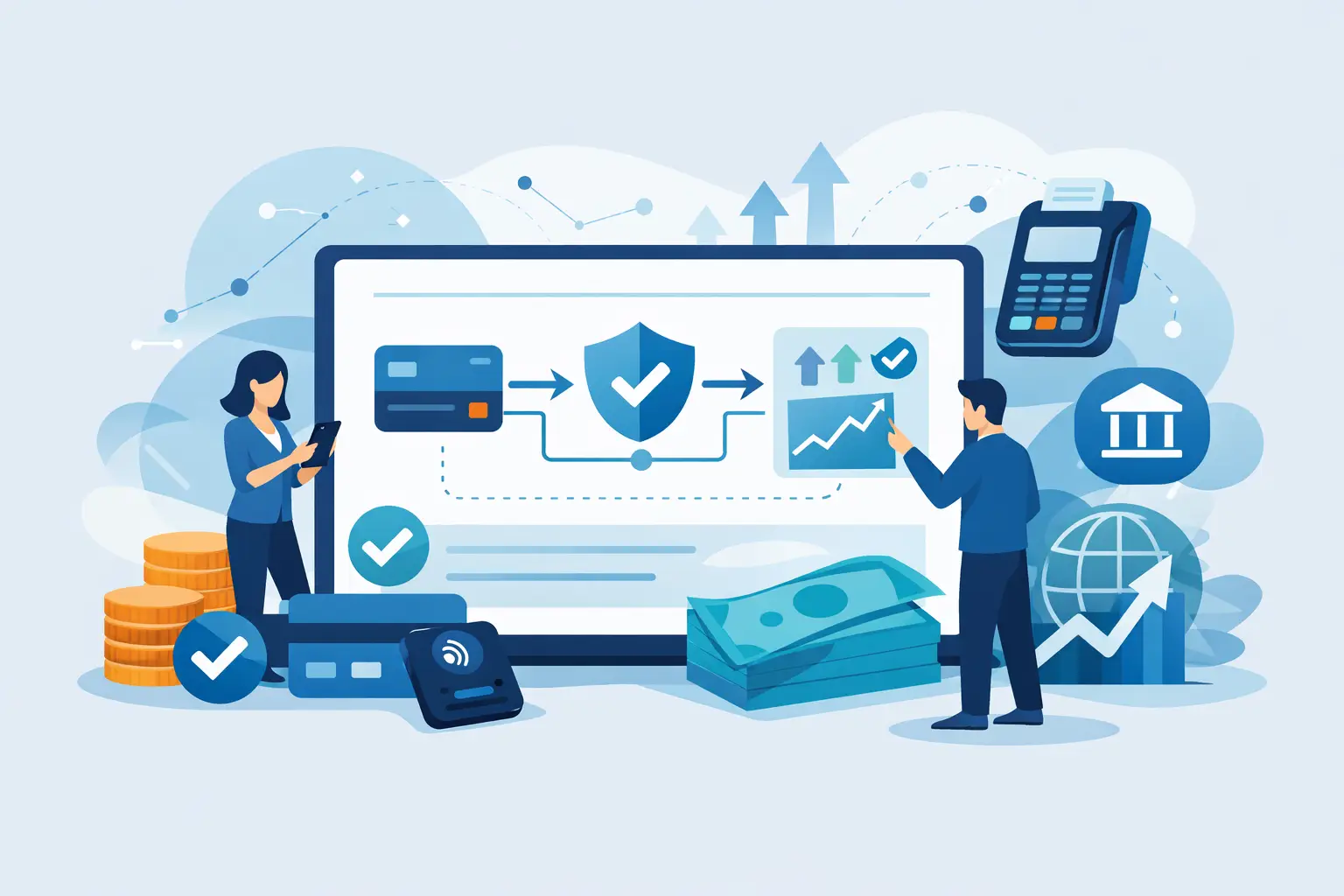
A failed payment is rarely just a failed payment. For a subscription business, it can mean avoidable churn. For a travel merchant, it can mean a lost high-value booking. For regulated and high-risk sectors, it may also expose weaknesses in acquiring coverage, fraud controls or transaction monitoring. Payment orchestration solutions give merchants the control to respond to these issues through one payment layer, rather than relying on a single processor or building separate integrations for every market.
What payment orchestration solutions do
Payment orchestration sits between your checkout and the payment providers, acquirers, fraud tools and alternative payment methods that support it. It provides a central environment for connecting, configuring and managing those services without forcing your business to operate each relationship in isolation.
The practical value is not simply having more providers connected. It is being able to decide how each transaction should be handled. A card payment from a customer in Germany may require a different acquirer, authentication path or retry strategy than a recurring payment from the UK or a mobile wallet transaction in another market.
With the right orchestration layer, merchants can create routing rules based on factors such as card type, issuer country, transaction value, currency, payment method, risk score, customer history and processor performance. This enables a payment operation that is designed around conversion, cost control and risk appetite rather than the limitations of one provider.
Why one payment provider can create commercial risk
A single PSP can be appropriate for an early-stage business with straightforward payment requirements. It reduces initial integration effort and gives operations teams one contract and one reporting environment to manage. But as transaction volumes, territories and payment preferences grow, a one-provider approach can become restrictive.
Every acquirer has different strengths. One may perform well for domestic card payments, while another may offer better acceptance for cross-border transactions, specific verticals or particular card schemes. Alternative payment methods also vary by region. A checkout that supports only international cards may be technically functional but commercially weaker where local bank payments, wallets or instalment options are expected.
There is also an operational consideration. Processor outages, changing risk thresholds and sudden policy changes can affect payment acceptance without warning. Merchants with no alternative route may have little room to protect revenue. Orchestration introduces controlled redundancy, allowing payment traffic to be directed to an appropriate available provider when a primary route is unavailable or underperforming.
This does not mean every merchant needs five acquirers on day one. More connections bring more commercial, technical and reconciliation work. The objective is purposeful coverage: the right combination of providers for your customer base, product category, markets and risk profile.
Intelligent routing improves payment performance
Intelligent routing is often the most visible benefit of payment orchestration. Instead of sending every transaction to the same destination, the platform applies configured rules to select the route most likely to deliver the desired outcome.
For example, a merchant can prioritise an acquirer with stronger approval performance for cards issued in a defined territory. A transaction that is declined for a technical reason may be retried through a secondary route, where permitted and configured responsibly. For recurring billing, tokenised credentials can support a more reliable payment experience while reducing exposure to sensitive card data.
Routing should never be treated as a mechanism for repeatedly pushing genuinely declined transactions through multiple providers. Excessive retry activity can increase fees, worsen customer experience and create scheme or acquirer concerns. Effective orchestration distinguishes between soft declines, technical failures and hard declines, then applies clear rules for each.
The best routing logic is reviewed continuously. Approval rates should be assessed by acquirer, issuer region, payment method, device type, currency and transaction type. A headline approval figure can conceal meaningful problems, particularly for merchants selling internationally or operating subscription models. Granular data shows where payment friction is occurring and where a different configuration may help.
Approval rates need context
A higher approval rate is valuable only when it is achieved sustainably. Transactions approved through weak controls can result in fraud losses, disputes and damaged acquiring relationships. Payment performance therefore needs to be evaluated alongside chargeback ratios, fraud rates, processing costs and customer support contacts.
For high-risk merchants, this balance is especially important. The correct payment strategy combines acquiring access with sector-aware fraud controls, 3D Secure v2 configuration, velocity rules, device and behavioural signals, and a clear approach to dispute prevention. Orchestration makes these tools easier to coordinate, but it does not replace sound risk governance.
A better checkout for international customers
Payment orchestration can also reduce checkout friction by presenting relevant payment options in the right market. Customers are more likely to complete a purchase when they can pay in a familiar currency and use a method they already trust.
A merchant expanding across Europe may need card acceptance, local bank-based methods, digital wallets and recurring payment support, depending on the countries served. For mobile-led businesses, the checkout must also perform reliably across devices and authentication journeys. Hosted payment fields, tokenisation and API-led integrations can help teams maintain a consistent brand experience while keeping card data handling within an appropriate compliance scope.
The checkout should remain focused. Offering every possible payment method to every customer can create confusion and add operational overhead. Instead, use transaction and market data to prioritise the methods that support real demand. This is where a central orchestration layer helps: payment options can be configured by country, currency, product type or customer segment without requiring a separate checkout build for each scenario.
Simplifying operations behind the payment flow
Payment teams often feel the impact of fragmented infrastructure long before customers do. Separate provider portals make it harder to compare approval performance, investigate declines, reconcile settlements and identify emerging fraud patterns. Finance teams may face inconsistent settlement files and currency flows, while technical teams manage multiple APIs, webhooks and update cycles.
Payment orchestration brings those operational elements closer together. A unified transaction view can support faster investigation, while centralised routing and payment-method configuration reduces the need for repeated changes across individual integrations. Webhooks and reporting feeds can provide downstream systems with the payment data needed for fulfilment, customer service, finance and risk management.
Reconciliation still requires careful planning. Different acquirers have different settlement timings, fee structures and reporting formats. A capable platform can standardise much of the transaction data, but merchants should define how fees, reserves, chargebacks, refunds and currency conversion are matched in their finance processes before launching new routes.
How to assess an orchestration partner
The platform itself matters, but the provider’s payments expertise matters just as much. A well-designed API cannot compensate for unsuitable acquiring relationships or routing rules that do not reflect your commercial model.
When assessing payment orchestration solutions, start with provider connectivity. Confirm that the platform can connect to the PSPs, acquirers and alternative payment methods relevant to your current markets and expansion plans. For merchants in complex verticals, ask directly about sector experience, underwriting support and the availability of acquiring options suited to the business model.
Security and compliance should be evaluated in practical terms. Look for PCI DSS Level 1 infrastructure, tokenisation, support for 3D Secure v2, role-based access and reliable transaction monitoring. You should also understand where sensitive data is stored, how credentials are managed and what support is available when a payment issue affects live revenue.
Finally, examine how configurable the platform is. Your team may need simple hosted checkout tools today and more advanced routing, recurring billing or multi-PSP logic later. A payment partner should support that progression without forcing an unnecessary rebuild. AllSecure, for example, combines gateway technology, acquiring access and configurable orchestration for merchants that need to manage international payment complexity from a single platform.
Build the payment stack around your real payment data
The strongest orchestration strategy starts with evidence, not assumptions. Review where customers abandon checkout, which issuers generate the most soft declines, how performance changes by territory and which payment methods are actually used. Then build routing and payment-method rules around those findings.
Treat your payment setup as a commercial system that needs regular attention. Test changes carefully, monitor the impact on approvals and disputes, and keep acquirer relationships aligned with how your business is evolving. When payment orchestration is managed with that discipline, it becomes a practical way to protect revenue while giving customers more reliable ways to pay.
Related Articles