20 Aug
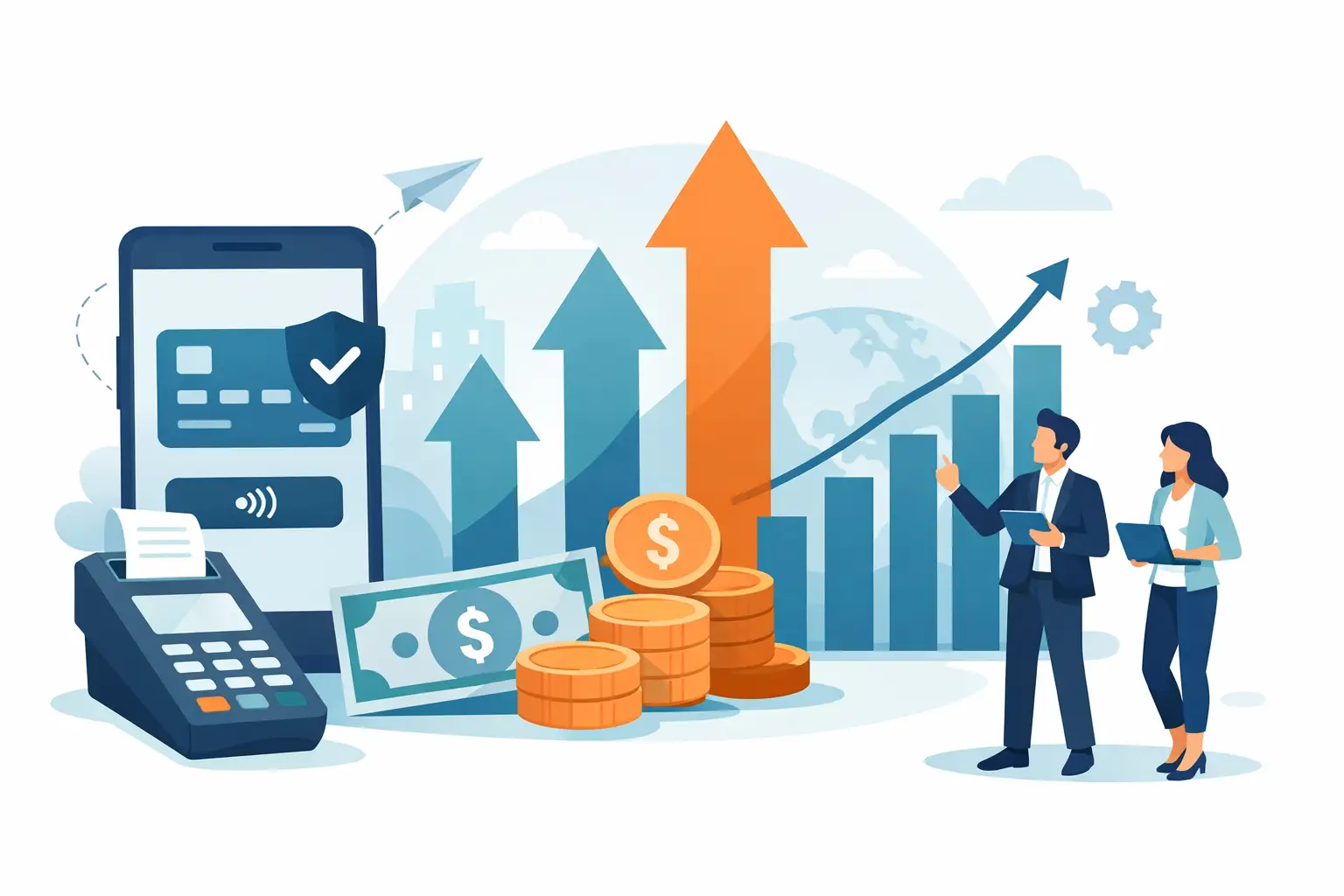
A customer reaches the final checkout step, enters valid card details and receives a decline. The sale is lost, but the cause may have nothing to do with available funds. It could be an issuer preference, an unsuitable acquirer route, an incomplete 3D-Secure flow or a risk rule that needs adjustment. Effective payment gateway solutions give merchants the visibility and control to resolve these moments rather than simply accept them as a cost of trading.
For merchants operating across products, channels and territories, payment acceptance is not a single technical connection. It is a commercial system that affects conversion, cash flow, customer trust and operational workload. The right infrastructure should help a business accept more legitimate transactions while applying stronger controls where risk is genuinely higher.
What payment gateway solutions need to solve
A gateway securely transmits payment data between the customer, merchant, acquirer, card scheme and issuer. That core function matters, but it is only the starting point. A gateway that processes transactions reliably but cannot adapt to local payment preferences, recurring billing requirements or changes in fraud patterns can quickly limit growth.
Modern merchants need payment flows that reflect how and where they sell. A subscription business may need tokenised card-on-file payments, intelligent retry logic and clear management of mandate changes. A travel merchant may need to manage delayed fulfilment and higher-value bookings. A regulated or high-risk business may require specialist acquiring access, more detailed transaction monitoring and a chargeback strategy built into its operating model.
The requirement is therefore not just to take a payment. It is to make each legitimate payment as easy as possible to complete, while ensuring suspicious activity is identified early and handled consistently.
A gateway should improve approval rates, not just process payments
Authorisation rates are one of the clearest indicators of payment performance. Yet a decline rate alone does not reveal the full picture. Some declines are correct: expired cards, insufficient funds and transactions rejected by an issuer for valid security reasons. Others may be recoverable through better routing, alternative acquirer coverage, an updated authentication journey or a well-timed retry.
A capable platform separates these outcomes. It provides transaction-level data so payment teams can identify whether declines are concentrated by issuer, card type, country, currency or payment route. Without that visibility, merchants often respond by making broad changes that damage conversion or increase exposure to fraud.
Intelligent routing changes the economics of acceptance
Where a merchant has access to more than one acquirer or payment service provider, payment orchestration can route transactions according to defined business rules. Those rules may consider the customer’s location, currency, card scheme, transaction value, historical approval performance or cost profile.
This is not a case for sending every transaction to the cheapest route. A lower processing fee is not a saving if it produces materially weaker approval rates or creates avoidable customer friction. The best route depends on the transaction and on the merchant’s commercial priorities.
For example, a merchant expanding into a new market may initially favour an acquirer with strong local issuer relationships. A business processing high volumes may spread traffic across approved partners to improve resilience. If one route experiences disruption, a properly configured failover plan can protect revenue and avoid a single point of failure.
Checkout design is part of payment performance
Checkout is where payment technology becomes a customer experience. Unnecessary fields, redirects that feel unfamiliar and weak mobile design can increase abandonment before an authorisation request is even sent. At the same time, removing every control is not a responsible answer. Merchants need a checkout that is simple for genuine customers and defensible from a security and compliance perspective.
Hosted payment fields and hosted checkout pages can reduce the amount of sensitive card data handled directly by the merchant environment. API-led integrations give product teams greater control over design and customer journeys. The right option depends on internal technical resources, the level of customisation required and the speed at which the business needs to launch.
A practical payment gateway should support both approaches, alongside payment links for assisted sales, virtual terminals for authorised staff and shopping-cart modules for faster deployment. Webhooks are equally important. They allow merchant systems to respond promptly to payment events, such as a completed authorisation, failed recurring charge or chargeback notification, without relying on manual reconciliation.
Security controls must reduce friction intelligently
Security is not separate from conversion. Poorly configured fraud controls can reject good customers. Insufficient controls can lead to fraud losses, chargebacks, monitoring pressure and damaged acquiring relationships. The objective is calibrated protection.
PCI DSS Level 1 infrastructure, encryption and tokenisation establish the foundation for secure card acceptance. Network tokenisation can improve the reliability of stored credentials by replacing card details with tokens that remain usable when a physical card is renewed or replaced. This is particularly valuable for subscription and recurring-payment models, where an expired card can otherwise create unnecessary churn.
3D-Secure v2 adds another layer, but it should be implemented with care. Its data-rich, risk-based approach can allow many low-risk payments to pass without a challenge, while applying stronger authentication when the risk or regulatory requirements justify it. Merchants should monitor challenge rates, authentication outcomes and post-authentication approvals, rather than treating 3D-Secure as a simple on-or-off setting.
Fraud rules also need regular review. A rule that was appropriate during a fraud spike may become too restrictive as customer behaviour changes. Device data, velocity checks, geolocation signals, transaction history and blocklist controls are more effective when used together than when treated as isolated filters.
Build payment operations around real business models
The strongest payment gateway solutions are configurable because merchants do not share the same risk profile, customer lifecycle or settlement requirements. A marketplace, for instance, may need to manage complex payment allocation and merchant onboarding. A telecoms business may need recurring collections across multiple plans. An online gaming operator may need strict controls over deposit patterns, customer verification and payment method availability by market.
This is also where specialist support matters. High-risk and regulated sectors can face limited acquiring options, higher scrutiny and rapidly changing requirements. The right provider should contribute more than a technical endpoint. It should help select suitable acquiring relationships, configure payment flows around the merchant’s risk appetite and investigate performance issues with clear operational ownership.
AllSecure combines gateway technology, payment orchestration, acquiring access and fraud-management capability within a single payment infrastructure. That approach can reduce the complexity of managing multiple providers while preserving the flexibility to route, monitor and optimise payments as the business changes.
Prepare for international growth before volume demands it
International payment acceptance brings more than extra currencies. Customers expect familiar card schemes, wallets and alternative payment methods. Issuers assess cross-border activity differently. Acquirers may have distinct underwriting requirements, and local regulations can shape authentication and data-handling obligations.
A merchant does not need to launch every payment method at once. In fact, adding poorly supported methods can create operational complexity without meaningful conversion gains. Start with evidence: where customers are located, which devices they use, how they prefer to pay and where checkout abandonment occurs. Then prioritise the methods and acquiring routes most likely to improve acceptance in those markets.
Multi-currency processing also needs careful treatment. Displaying local currency can improve customer confidence, but merchants must understand settlement currencies, foreign-exchange costs, refund handling and reconciliation. Finance teams should be able to match transactions, fees, reserves, settlements and chargebacks without stitching together disconnected reports.
Questions to ask before selecting a provider
A payment platform should be assessed against the merchant’s next stage of growth, not only its immediate integration requirement. Four questions reveal whether a provider can support that trajectory:
- Can the platform connect to multiple acquirers and payment methods without requiring a full re-platform?
- Does it provide meaningful approval, decline, fraud and chargeback data at transaction level?
- Can payment and risk rules be configured for different products, territories and customer segments?
- Is experienced technical and operational support available when acceptance performance changes or a new market creates complexity?
The answers should be demonstrated in the proposed payment flow, reporting environment and escalation process. A sales presentation is not enough. Payment teams should understand how a failure is detected, who owns resolution and how quickly routing or fraud settings can be adjusted.
A payment gateway is most valuable when it becomes an active part of commercial decision-making. Treat it as infrastructure that learns from transactions, supports new routes to market and protects customer trust, and it can turn payment acceptance from a constraint into a measurable source of growth.
Related Articles