09 Nov
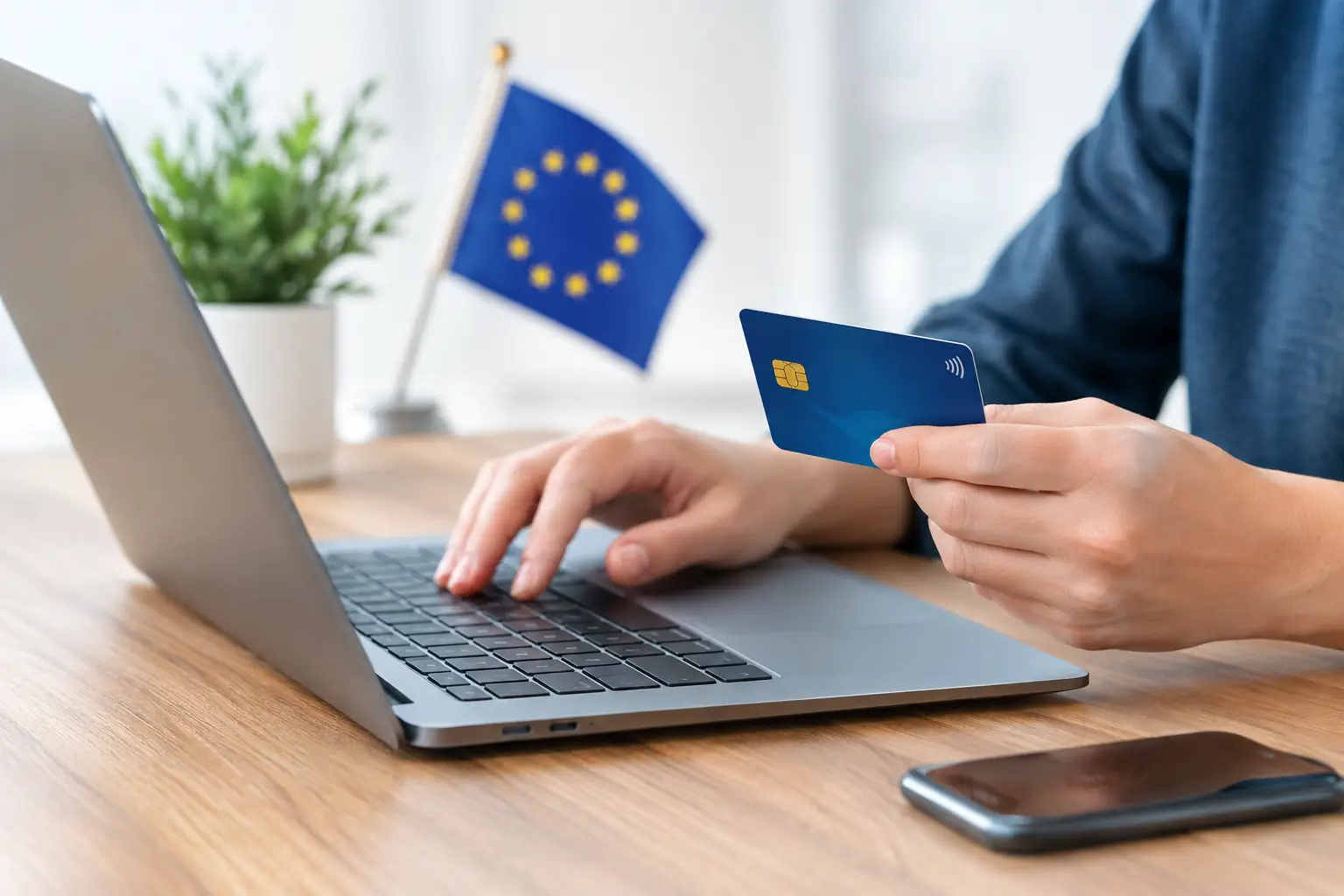
A checkout can look polished, support every major card scheme and still lose revenue because the transaction was sent to the wrong acquirer, challenged with unnecessary friction or declined without a useful retry path. For merchants comparing the best payment gateways Europe has to offer, the real question is not which provider has the longest feature list. It is which payment set-up can accept legitimate transactions reliably for your business model, countries, risk profile and growth plans.
This matters particularly for subscription services, travel businesses, regulated gaming operators, online dating platforms and digital merchants. These sectors often need more than card acceptance. They need suitable acquiring relationships, intelligent routing, recurring billing controls, fraud tools that do not suppress conversion and support from people who understand their category.
What makes a payment gateway right for a European merchant?
A payment gateway securely captures and transmits payment data between the customer, merchant, acquirer and card networks. That description is technically correct, but commercially incomplete. A gateway affects whether a customer completes payment, how quickly a failed payment can be recovered and how much operational effort is needed to manage exceptions.
Europe is not one uniform payments market. Customer preferences vary by country, as do issuer behaviour, local payment methods, currencies, authentication patterns and acquiring appetite. A merchant selling subscriptions in the UK, Germany, Spain and the Nordic markets may need different payment options and routing logic from a travel platform taking higher-value bookings across multiple currencies.
The strongest gateway choice therefore combines technical capability with acquiring suitability. A capable API alone cannot solve a restricted merchant category or an acquirer that is poorly matched to your transaction profile. Equally, an approved merchant account will underperform if the gateway creates unnecessary checkout friction or provides little visibility into decline reasons.
Best payment gateways Europe: evaluate the full payment stack
Rather than relying on a generic league table, assess gateways against the complete payment acceptance journey. The most appropriate option depends on your industry, average transaction value, countries served, payment methods, chargeback exposure and whether you operate one business entity or several.
Acquiring connectivity and merchant category expertise
For many merchants, acquiring access is the deciding factor. Mainstream retail businesses may have broad provider choice. Licensed gambling, adult entertainment, online dating, telecoms, high-value travel and some digital subscription models can face more detailed underwriting, tighter monitoring requirements or fewer acquiring options.
A gateway should connect you to acquiring partners prepared to support your legitimate business model, subject to their due diligence and risk criteria. Ask whether the provider has practical experience with your merchant category, not merely an open application form. That includes understanding expected chargeback ratios, refund policies, fulfilment evidence, licensing where relevant and the customer support processes that underwriters will review.
No credible provider should promise universal approval. A useful payment partner will instead help present your business accurately, identify suitable acquiring routes and structure the technical solution around the providers available to you.
Intelligent routing and multi-acquirer resilience
Using one acquirer can be sufficient for a domestic merchant with a stable, low-risk profile. It can also create concentration risk. If approval performance weakens, a provider changes its risk appetite or an outage occurs, checkout revenue can be exposed.
Multi-acquirer connectivity gives merchants more control. With the right payment orchestration layer, transactions can be routed according to factors such as card type, issuing country, currency, transaction value, historical approval performance and acquiring rules. The aim is not to route transactions blindly to the cheapest provider. It is to select the route most likely to deliver a successful, compliant payment at an acceptable total cost.
Routing rules need active governance. An acquirer that performs well for domestic debit cards may be less effective for cross-border credit card transactions. A route that improves authorisation rates may introduce higher fees or a different fraud profile. The best systems provide clear reporting so payment teams can test, measure and refine these decisions.
Checkout design, authentication and conversion
European card payments commonly require Strong Customer Authentication under PSD2, but the way authentication is applied has a direct effect on conversion. A gateway should support 3-D Secure v2, including the exchange of relevant transaction data that helps issuers assess risk and, where appropriate, complete authentication with minimal customer interruption.
Hosted payment fields and hosted checkout pages can reduce the merchant’s PCI scope while keeping the payment experience aligned with the brand. For businesses with development resource, REST APIs, mobile SDKs and webhooks allow more tailored journeys. For leaner teams, payment links and prebuilt modules can provide a faster route to acceptance.
The right approach depends on your checkout. A straightforward one-off digital purchase may suit a hosted checkout. A subscription platform may need greater control over plan changes, retries and stored credential flows. An airline or travel business may need to capture additional booking data and manage delayed fulfilment risk.
Alternative payment methods and currency coverage
Cards remain essential, but card-only checkout can limit reach in markets where local bank-based methods, wallets or other alternative payment methods are well established. The priority is not adding every available method. Each one adds reconciliation, support and risk-management considerations.
Review payment methods country by country using your actual sales data and expansion targets. Consider customer demand, settlement currencies, refund handling, dispute processes and whether the method suits your transaction type. A recurring digital service may need reliable tokenised card payments first, while a merchant expanding into selected European markets may see value in local methods that customers already trust.
Multi-currency acceptance also deserves careful attention. Presenting a familiar currency can improve customer confidence, but pricing, settlement and foreign-exchange arrangements must be understood before launch. A gateway supporting a wide currency range is useful only when the accompanying acquiring and operational model works for your business.
Recurring payments need their own strategy
Subscription revenue is particularly sensitive to payment failure. A customer may be willing to continue using a service, yet the renewal fails because a card has expired, the issuer declines a recurring charge or the customer has changed bank details.
Look for gateway capabilities such as network tokenisation, account updater support where available, secure card-on-file management, intelligent retry logic and clear customer notifications. Retries should be configured thoughtfully. Repeatedly resubmitting a declined transaction without considering the decline reason can increase costs, frustrate customers and create avoidable issuer concern.
Merchants should also distinguish between involuntary churn and intentional cancellation. The payment platform can help recover legitimate failed renewals, but transparent billing descriptors, clear cancellation processes and accessible customer support remain essential for reducing disputes.
Fraud controls should protect revenue, not block it
Fraud prevention is often treated as a switch: strict controls mean safety, relaxed controls mean conversion. In practice, the best result comes from calibrated controls. Rules that are too aggressive can reject good customers, especially for cross-border purchases, higher-value bookings or categories with naturally unusual transaction patterns.
A suitable gateway should provide tools such as device and velocity signals, address verification where applicable, 3-D Secure management, blacklist and whitelist controls, transaction monitoring and case-management workflows. It should also make decisions explainable. Payment teams need to know why a transaction was declined, reviewed or routed differently.
Chargeback management belongs in the same conversation. Evidence collection, retrieval-request handling, refund policies and clear descriptors influence dispute outcomes as much as a fraud score. For higher-risk merchants, the ability to monitor chargeback trends by product, country, payment method and acquirer is commercially valuable.
Questions to ask before selecting a gateway
Before committing, ask providers how they support your specific countries, entity structure and merchant category. Request clarity on supported acquirers, payment methods, settlement flows, PCI responsibilities, token portability, reporting depth and service-level arrangements.
You should also examine the integration path. Can your team use APIs and webhooks effectively? Is a hosted solution more proportionate? How are refunds, partial captures, recurring payments, chargebacks and reconciliation managed? The answers matter more than a demonstration showing a successful card payment.
Finally, model the total cost rather than comparing a single processing rate. Include gateway fees, acquiring fees, cross-border costs, foreign exchange, fraud tooling, chargeback fees, development work and the revenue effect of approval rates. A cheaper route that declines more legitimate customers is rarely the lower-cost option.
Build for performance, not just launch
The best gateway arrangement is one that can change as your payment data changes. Monitor approval rates by issuer country and payment method, checkout abandonment, authentication outcomes, fraud rates, chargebacks and recurring-payment recovery. Review these measures regularly with both your gateway and acquiring partners.
For merchants operating in complex or higher-risk categories, a tailored payment architecture can be more valuable than a standard gateway package. AllSecure helps businesses assess acquiring options, connect multiple payment providers and build payment flows that balance conversion, security and operational control. A focused review of your current decline patterns, markets and transaction profile is often the most practical place to start.
Related Articles