15 Nov
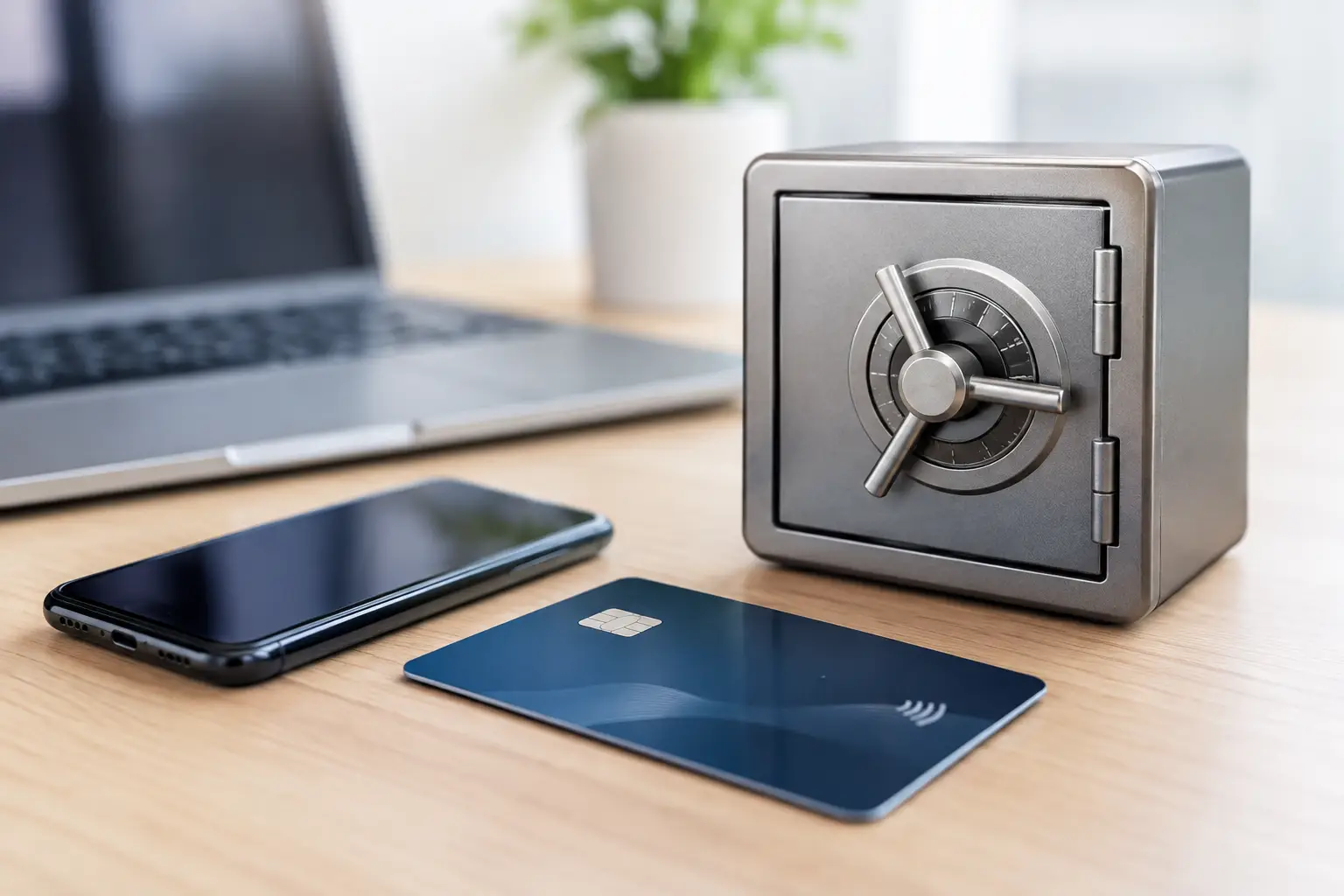
A subscriber renews their membership, a traveller pays a balance after changing a booking, or a returning customer checks out with one tap. In each case, the merchant needs a way to charge the card without storing sensitive card details in its own systems. That is the practical answer to what is card vaulting: a controlled method for storing payment credentials securely and using them again through a token rather than exposing the underlying card data.
For merchants with recurring revenue, high repeat purchase volumes or complex payment flows, card vaulting is not simply a security feature. It affects checkout conversion, authorisation performance, operational resilience and the ability to change or add payment providers without disrupting customers.
What is card vaulting?
Card vaulting is the secure storage of a customer’s card details by a PCI DSS-compliant payment provider, gateway or token service. Once a card has been captured through an approved payment flow, the card number is replaced with a unique reference, usually called a token. The merchant stores and uses that token rather than retaining the primary account number, expiry date and security code.
When a future payment is needed, the merchant sends the token and transaction details to its payment platform. The platform retrieves the protected credentials inside the vault and submits the transaction to the relevant acquirer or payment service provider. The merchant’s application never needs direct access to the full card number.
This distinction matters. A token is useful only within the defined payment environment and permissions. If a database containing tokens is exposed, the information is substantially less useful to an attacker than raw card data. It does not remove every security obligation, but it reduces the merchant’s card-data exposure and can simplify the scope of PCI DSS compliance.
How card vaulting works in a payment flow
A well-designed vaulting flow begins at checkout. The customer enters their card details through hosted payment fields, a hosted checkout page or a secure mobile component. These methods ensure sensitive data travels directly to the payment platform rather than through the merchant’s own servers.
After initial authorisation or validation, the platform creates a token associated with the card credentials. The merchant stores that token alongside its own customer and subscription records. At the next payment event, the merchant references the token and indicates the transaction type, such as a customer-initiated purchase, a scheduled subscription renewal or an unscheduled merchant-initiated charge permitted by the customer agreement.
The payment gateway then applies the relevant processing logic. This may include fraud checks, 3D Secure where appropriate, routing to a preferred acquirer and use of network tokenisation capabilities. The acquiring partner submits the transaction through the card scheme, while the gateway returns the result to the merchant in real time.
For a customer, the experience can be as simple as choosing a saved card. Behind that simple interaction, accurate transaction classification and secure token handling are essential. Incorrectly labelling stored-credential transactions can lead to avoidable declines, compliance issues or disputes.
Vault tokens and network tokens are not the same
The term tokenisation covers more than one technology, and merchants should understand the difference.
A vault token is typically created by a gateway, payment service provider or token service. It is a reference that lets a merchant use stored payment credentials within that provider’s environment. Its value is primarily secure storage and controlled reuse.
A network token is issued through the card schemes and represents a card credential for a particular merchant or payment relationship. It can be updated when the physical card expires or is replaced, subject to issuer and scheme support. Network tokens may also carry cryptographic information that strengthens transaction security and can improve approval performance in some scenarios.
The two can work together. A gateway may provide its own vault token to the merchant while using network tokenisation in the background. This can give the merchant a consistent technical interface while helping to reduce renewal failures caused by expired or reissued cards.
Where card vaulting delivers commercial value
The clearest use case is recurring billing. Subscription services, membership platforms, telecoms providers and digital content businesses need to collect payments on an agreed schedule without asking customers to re-enter card details each month. Securely vaulted credentials make that possible while supporting the correct stored-credential indicators.
Vaulting is equally valuable for travel and hospitality. A merchant may need to take a deposit, collect a later balance, process a no-show fee under agreed terms or accept payment for booking changes. These transactions carry different risk and customer-service considerations, so token storage must sit alongside clear consent records, transparent terms and appropriate fraud controls.
For gaming, licensed gambling, online dating and legal adult subscription services, saved-card payments can reduce friction for legitimate returning customers. However, these sectors also face elevated fraud, chargeback and acquiring scrutiny. Card vaulting should therefore be paired with velocity controls, device and behavioural signals, 3D Secure strategies and clear evidence of customer consent. Stored credentials are not a reason to weaken risk management.
A further benefit is checkout conversion. Returning customers are more likely to complete payment when a recognised, securely saved method is available. The result depends on the market, device type and customer relationship, but removing unnecessary card entry can reduce abandonment, particularly on mobile.
Card vaulting and payment orchestration
A basic vault can create a dependency on one provider. If tokens cannot be used outside that provider’s ecosystem, moving acquirers or introducing a new payment service provider may require customers to enter their cards again. That creates friction and may put recurring revenue at risk.
This is why vaulting architecture deserves attention during provider selection. Merchants operating across multiple markets or relying on several acquiring relationships should ask how token portability, token migration and multi-acquirer routing are handled. The answer varies by provider, card scheme, jurisdiction and commercial arrangement.
Payment orchestration can help merchants separate their customer payment experience from individual processing connections. A centralised vaulting and token layer can support routing decisions across eligible acquirers while maintaining a consistent saved-card experience. It can also improve resilience when an acquirer experiences disruption or when a transaction is more likely to be approved through an alternative permitted route.
There are trade-offs. Centralising credentials can simplify operations, but it makes the choice of vault provider strategically significant. A merchant should assess technical uptime, PCI DSS status, data residency requirements, API quality, token lifecycle support, reporting and the practical process for migration or exit. The cheapest integration is not always the lowest-cost long-term option.
Security, compliance and customer consent
A card vault reduces exposure to cardholder data, but it does not transfer all responsibility away from the merchant. Businesses still need to secure their systems, control access to payment-related records, monitor for fraud and comply with applicable privacy and card-scheme requirements.
A sound implementation should use hosted payment fields or hosted checkout to minimise direct card-data handling. Tokens should be treated as sensitive operational data, with access restricted by role and protected in logs, analytics platforms and support tools. Merchants should avoid sending payment tokens through insecure channels or placing them in URLs.
Customer consent is equally important. The checkout journey should explain when a card will be saved and how future charges will be made. For recurring payments, present the billing frequency, amount or pricing basis, cancellation process and merchant descriptor clearly. This reduces confusion, supports dispute defence and helps customers recognise legitimate transactions on their statements.
Merchants should also plan for token lifecycle events. Cards expire, are replaced after loss or fraud, and may be closed by issuers. Account updater services and network tokenisation can reduce disruption, but they do not eliminate declines. A thoughtful dunning process should notify customers at the right time and offer an easy way to update their payment method.
Questions to ask before implementing card vaulting
Before selecting a vaulting solution, payment teams should establish which payment scenarios they need to support. A business collecting fixed monthly subscriptions has different requirements from an airline managing delayed capture and booking amendments, or a marketplace processing repeat customer purchases across multiple countries.
It is sensible to confirm whether the solution supports recurring and merchant-initiated transaction frameworks, network tokens, account updater services, 3D Secure v2, multi-currency processing and the payment methods relevant to each market. Merchants should also ask whether tokenised credentials can be migrated, whether the vault can support more than one acquirer, and how fraud screening works for saved-card payments.
Technical teams should test more than the happy path. Test expired-card handling, partial approvals where relevant, failed renewal retries, refunds, chargebacks, duplicate-payment prevention and webhook notifications. Finance and operations teams need clear reconciliation data showing the relationship between customer records, tokens, authorisations, captures, refunds and settlements.
Card vaulting works best when it is designed as part of a wider payment acceptance strategy, not added as an isolated checkout feature. For merchants balancing recurring revenue, international expansion and specialist acquiring requirements, AllSecure can help assess a vaulting and routing approach that supports secure repeat payments without creating unnecessary operational dependency.
Related Articles