07 Aug
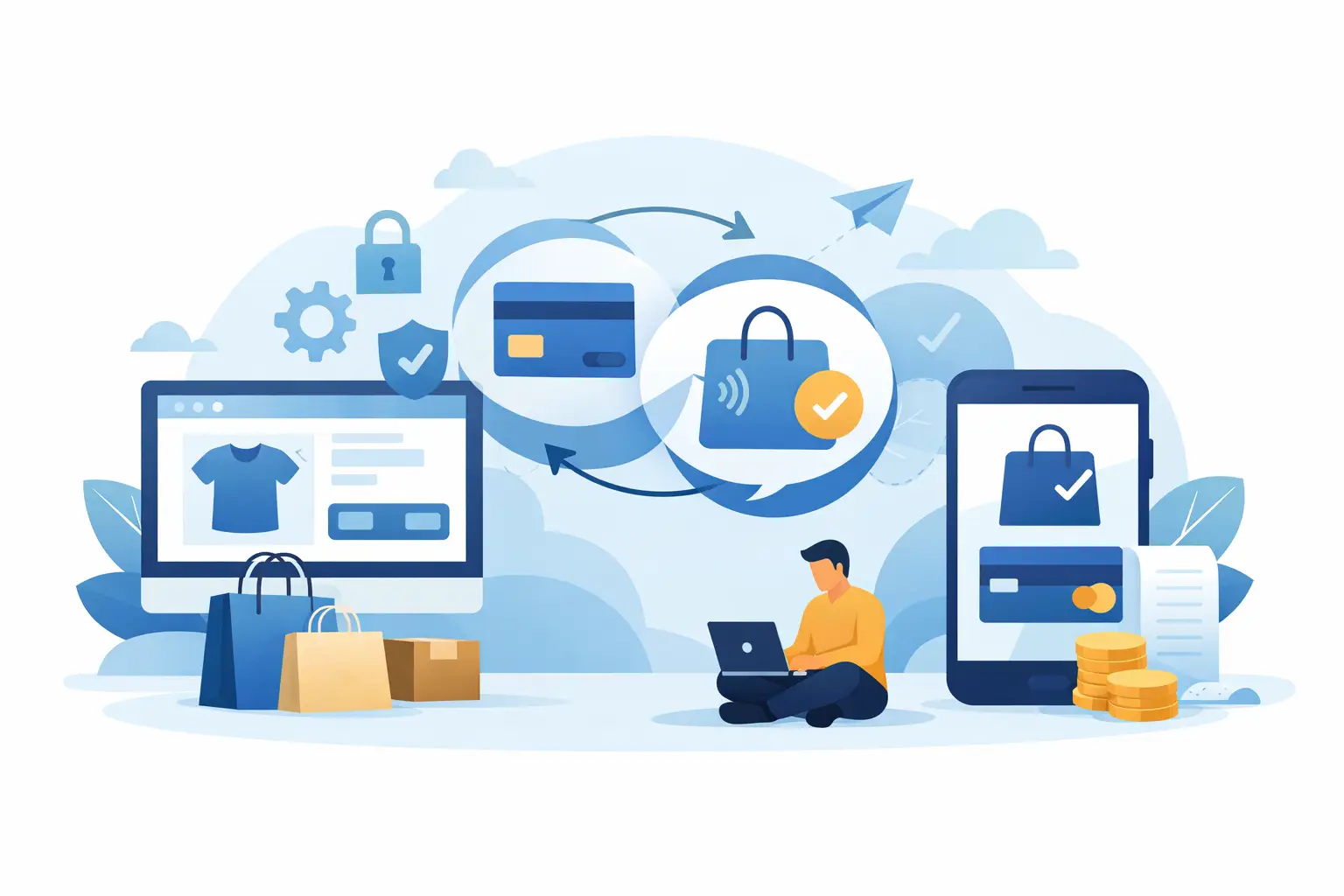
A failed payment is rarely just a technical event. For an ecommerce business, it can mean an abandoned basket, a lost subscription renewal or a customer who does not return. Effective payment API integration for ecommerce turns payment acceptance into a controlled commercial function: one that protects card data, reduces friction and gives your business more ways to approve legitimate transactions.
For merchants selling across borders, operating recurring billing or working in regulated sectors, a basic card form is not enough. The integration must handle the real conditions of online commerce: local payment preferences, issuer declines, Strong Customer Authentication, fraud attempts, refunds, disputes and changing acquirer performance.
What a payment API integration should achieve
A payment API connects your checkout, mobile app or back-office systems to the payment infrastructure that authorises, captures, refunds and reconciles transactions. Its value is not simply that it processes a card payment. It should give your team control over how a payment is presented, where it is routed and what happens when the first attempt fails.
At checkout, the API collects or tokenises payment data and submits it to the appropriate processor or acquirer. The response must then be reflected accurately in your order flow. A successful authorisation may trigger fulfilment, while a pending transaction may require a webhook-driven update rather than an immediate customer message. This distinction matters, particularly for bank transfers, wallet payments and 3D Secure challenges that do not return an instant final result.
The strongest integrations also support token storage, recurring charges, refunds, partial captures, payment links and real-time transaction reporting. For a growing merchant, these capabilities reduce the need to build separate payment processes for every sales channel or market.
Choose the right integration model before writing code
The best technical model depends on your checkout experience, PCI scope and internal development capacity. A hosted payment page is often the fastest route to acceptance. The customer is redirected to a secure payment environment, which can reduce your exposure to cardholder data and shorten implementation time.
Hosted payment fields provide a more branded checkout. Sensitive card fields are served by the payment provider while the rest of the page remains under your control. This is a practical balance for merchants that want a consistent customer journey without handling raw card data directly.
A direct API integration offers the greatest flexibility. It can support custom payment flows, advanced subscription logic and tailored routing decisions, but it carries greater implementation and compliance responsibilities. If your business needs an app-based checkout, stored credentials or a multi-step booking flow, direct API access may be justified. If speed to market is the priority, hosted options may produce a better commercial outcome.
There is no universal answer. A travel platform may need to authorise a card at booking and capture later, while a digital-content business may require immediate capture and recurring token-based billing. Define the intended payment lifecycle before selecting endpoints.
Keep card data out of your systems where possible
Tokenisation replaces sensitive card details with a non-sensitive token that your platform can use for future transactions. This supports repeat purchases and subscriptions without retaining card numbers in your own environment. It also helps reduce PCI DSS obligations, although it does not remove them entirely.
For most merchants, the practical objective is clear: minimise the systems that touch payment data, document the flow of every payment event and give access only to staff and services that need it. PCI DSS Level 1 gateway infrastructure, secure hosted fields and controlled token use provide a sound foundation, but your own implementation choices still matter.
Build payment flows around real transaction states
Many integration problems begin when an ecommerce platform treats payment status as a simple approved-or-declined result. In practice, a transaction can be created, pending customer action, authorised, captured, reversed, refunded, partially refunded or disputed. Your order management logic needs to understand each state.
Use asynchronous webhooks as the source of truth for final payment updates. A browser redirect can fail if a customer closes a tab, loses connectivity or returns to your site before the payment method has confirmed the transaction. Webhooks allow your system to update orders when the gateway receives the definitive status.
Your webhook endpoint should validate signatures, return a prompt acknowledgement and process events idempotently. Idempotency means the same notification can be received more than once without creating duplicate orders, captures or refunds. Store the gateway transaction ID, event ID and processing result. This is a small engineering discipline that prevents expensive operational errors.
Also separate authorisation from capture where your fulfilment model requires it. Authorising at checkout confirms available funds; capturing settles the amount. Hotels, travel businesses and merchants shipping physical goods may benefit from this distinction. Digital services and low-value goods may be better served by immediate capture. The correct approach depends on delivery timing, cancellation rates and your acquiring rules.
Design checkout for approval rates, not just appearance
A polished checkout can still underperform if the payment logic is weak. Payment API integration for ecommerce should support the fields, authentication and routing choices that help issuers approve legitimate customers.
Collect accurate billing information without making the form needlessly long. Pass device and browser data where required for 3D Secure v2 risk assessment. Make authentication steps clear to the customer, especially where a bank app or one-time passcode is involved. Confusing instructions at this point can turn an approved transaction into abandonment.
Offer payment methods that match the markets you serve. Cards remain central to international ecommerce, but local methods, bank-based payments and digital wallets can be decisive in specific territories. Multi-currency display and settlement options can also improve customer confidence and simplify finance operations.
Do not treat every decline as final. Some soft declines can be retried under controlled rules, after the customer completes authentication or through an alternative acquirer. Retrying indiscriminately, however, can raise scheme-monitoring and customer-experience risks. Set limits by decline reason, transaction value, geography and customer history.
Use orchestration when one route is not enough
As transaction volume or market coverage grows, relying on a single processor can create avoidable dependency. Payment orchestration allows a merchant to connect multiple payment service providers and acquirers through a central integration, then apply routing rules based on currency, card type, country, approval performance or transaction risk.
This is particularly valuable where acquiring appetite differs by vertical. A subscription merchant may need specialist support for stored credentials and recurring payments. A gaming, dating or adult business may need acquiring relationships that understand the sector, alongside more granular fraud controls. Merchants in travel and hospitality may require delayed capture, pre-authorisation and higher-value transaction handling.
Routing should be evidence-led. Start with clear rules, then monitor approval rates, decline codes, processing costs and chargeback trends by acquirer. Sending every transaction to the lowest-cost route can be a false economy if it weakens acceptance. The right route is the one that balances approval quality, risk exposure, settlement requirements and cost.
A platform such as AllSecure can centralise these connections while giving merchants the flexibility to configure payment flows around their markets and risk profile. The commercial benefit is not merely fewer integrations. It is the ability to adapt payment acceptance without rebuilding checkout each time your acquiring strategy changes.
Treat fraud controls as part of conversion strategy
Fraud prevention should stop high-risk activity without blocking genuine customers. Overly aggressive rules can increase false positives, damaging conversion and customer lifetime value. Weak controls, on the other hand, expose the business to chargebacks, penalties and lost acquiring capacity.
A useful risk strategy combines several signals: velocity checks, IP and device intelligence, transaction history, BIN data, billing and shipping consistency, 3D Secure outcomes and manual review for selected high-value orders. The weighting of these signals should differ by business model. A recurring subscription has a different fraud pattern from a one-off luxury purchase.
Monitor chargeback reason codes as carefully as fraud scores. Some disputes point to genuine card fraud; others indicate unclear descriptors, poor cancellation processes or delivery issues. Payment data can identify the problem, but operations teams must act on it. Clear descriptors, accessible support and documented refund policies are payment-performance tools as much as customer-service measures.
Test the integration beyond the happy path
Before launch, test successful payments, hard and soft declines, 3D Secure challenges, timeout behaviour, duplicate submissions, webhook retries, refunds and cancelled customer journeys. Test on mobile networks as well as desktop browsers. If you offer subscriptions, test initial customer-initiated payments and later merchant-initiated charges separately.
After launch, review payment performance routinely. Watch authorisation rates by market and payment method, checkout abandonment, fraud-review volumes, refund timings and dispute ratios. A payment API is not a set-and-forget connection. Acquirer performance changes, issuer rules evolve and customers adopt new payment preferences.
The most useful next step is to map one real customer journey from checkout to settlement, including every status change and exception. That exercise will show where payment friction is costing revenue and where a better integration decision can protect it.
Related Articles