29 Sep

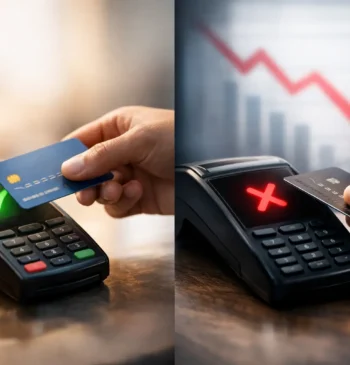
A checkout can lose revenue in seconds. A declined card, an unfamiliar authentication step or the absence of a preferred local method is often enough to turn high-intent customers into abandoned baskets. The most valuable checkout trends are therefore not cosmetic changes. They are payment decisions that protect approval rates, reduce avoidable friction and give merchants greater control when markets, fraud patterns and issuer rules change.
For international and regulated businesses, the stakes are higher. Customers expect familiar payment choices and fast mobile journeys, while finance and risk teams need traceability, compliance and effective controls. The right approach is not to implement every new payment feature. It is to build a checkout that adapts intelligently to the customer, transaction and territory.
Checkout trends that matter commercially
Payment choice is becoming more local
Cards remain fundamental to online commerce, but a card-only checkout increasingly limits conversion. Buyers often trust the payment methods they already use for daily banking, wallets or local transfers. In some markets, a domestic method is not an alternative at all. It is the expected way to pay.
This does not mean adding every available method to every checkout. Too many options can create hesitation, complicate reconciliation and increase operational overhead. The better model is selective localisation: present methods according to the shopper’s country, currency, device, basket value and transaction history.
For example, a merchant selling digital services across several European territories may prioritise cards and wallets for one market, while displaying bank-based methods or local schemes for another. The payment page should feel relevant without making the customer work to find the right option. Payment orchestration makes this practical by allowing merchants to configure routing and payment-method availability centrally rather than rebuilding each checkout market by market.
Wallets and saved credentials are reducing repeat-purchase friction
Customers who return to buy again do not want to re-enter card details. Network tokenisation, card-on-file programmes and digital wallets help remove this friction while improving security. A token can replace exposed card data with a credential designed for a particular merchant or transaction context, limiting the value of stolen payment information.
The commercial benefit is more than speed. Tokenised credentials can support stronger authorisation performance because they are more current and can be updated when a card is renewed or replaced. This is particularly relevant for subscriptions, travel businesses with delayed fulfilment and merchants with frequent repeat transactions.
However, saved payments must be implemented with clear consent and transparent customer controls. Customers should understand when a credential will be used, how to manage it and whether future payments are recurring, instalment-based or merchant-initiated. Ambiguity may create short-term conversion, but it often returns later as disputes and chargebacks.
Authentication is becoming more risk-based
Strong Customer Authentication remains a major consideration for businesses serving European customers. The challenge is to apply authentication where it is required and valuable without forcing every legitimate customer through unnecessary steps.
3D Secure v2 supports richer transaction data and a more contextual authentication process. When issuers have sufficient confidence in the transaction, many payments can be approved through frictionless authentication. When risk is higher, the issuer can request a challenge, often using the customer’s banking app or biometric confirmation.
The quality of data sent with the authorisation request matters. Accurate customer, device, shipping and transaction information gives issuers a better basis for assessing risk. Merchants should also monitor outcomes by issuer, country, payment method and authentication route. A high challenge rate, poor completion rate or unexpected decline pattern may indicate a configuration issue rather than a customer problem.
It depends on the business model. A high-value first purchase in a fraud-prone category may justify more scrutiny. A known subscriber paying with a tokenised credential may be a suitable case for a properly managed exemption or merchant-initiated transaction flow. The objective is not less security. It is proportionate security that preserves genuine revenue.
Mobile checkout is now the primary conversion environment
Many payment journeys begin and end on a mobile device. Yet mobile checkout still fails when desktop assumptions are carried into a smaller screen: lengthy forms, tiny error messages, redirects that lose the session and payment fields that do not work reliably with autofill.
A strong mobile flow asks only for information needed to complete the payment. It supports wallet payments where relevant, uses responsive hosted payment fields and provides immediate, specific validation when details are missing or incorrect. Customers should not have to guess why a payment failed or whether they have been charged.
Hosted checkout pages can be the right choice for merchants seeking a quick, compliant route to market. They reduce the direct handling of card data and can simplify maintenance. API-led payment fields are better suited to businesses that need tighter control of branding, customer experience and payment logic. Neither route is automatically superior. The decision should reflect internal technical capability, compliance scope and the complexity of the payment strategy.
Payment failure recovery is a conversion discipline
Not every failed attempt is a true decline. Customers may abandon during authentication, mistype a detail, encounter a temporary issuer response or use a card that is unavailable for the selected currency. Treating every failure as final leaves recoverable revenue on the table.
Effective checkout design distinguishes between hard declines, temporary failures and customer-correctable errors. The customer-facing message should be useful without exposing sensitive fraud logic. Where appropriate, offer another payment method, allow a controlled retry or direct the customer to contact their bank.
Behind the scenes, merchants need real-time visibility into decline codes, abandonment points and retry outcomes. For recurring billing, carefully timed smart retries can recover payments after insufficient-funds responses, but aggressive retrying can increase fees, annoy customers and damage issuer relationships. Set rules by decline reason, product type, customer history and local market behaviour.
Orchestration is moving from contingency plan to growth infrastructure
A single acquirer or processor can be sufficient for a simple domestic business. It becomes a constraint when merchants expand internationally, operate in higher-risk sectors or require business continuity across several payment channels.
Payment orchestration enables merchants to connect multiple acquirers, PSPs and alternative payment methods through one integration. It can direct transactions based on geography, card scheme, currency, approval performance, cost, risk profile or processor availability. Intelligent routing is not simply about finding the lowest fee. A lower-priced route that declines more genuine customers can cost far more in lost sales.
The discipline is to test and measure. Compare approval rates by route while separating issuer declines from technical failures, fraud-rule blocks and authentication outcomes. Review performance at a granular level because an acquirer that performs well in one territory or card category may not be the right route elsewhere. Configure failover carefully too. A secondary route can protect revenue during disruption, but it must not create duplicate authorisations or undermine fraud controls.
For complex merchants, orchestration also improves operational resilience. It reduces reliance on a single relationship and allows acquiring strategies to evolve without a full checkout rebuild. That flexibility is valuable in regulated sectors where acquirer appetite, scheme requirements and risk conditions can change quickly.
Fraud controls need to work with conversion, not against it
Fraud prevention is increasingly judged by its effect on both loss rates and approval rates. A rule set that blocks every uncertain transaction may appear safe until it starts declining good customers, especially cross-border shoppers and first-time buyers.
Modern fraud management combines rules, scoring, velocity controls, device and behavioural signals, list management and manual review where appropriate. The strongest programmes are tuned continuously. They identify the patterns behind confirmed fraud and chargebacks, then adjust controls without applying broad restrictions to legitimate traffic.
High-risk and subscription businesses should pay particular attention to post-payment signals. Refund behaviour, customer-service contact, cancellation patterns and early dispute activity can reveal weaknesses that authorisation data alone will not show. Clear descriptors, visible terms, accessible cancellation processes and prompt support are payment-risk controls as much as customer-service practices.
Build for measurement, not assumptions
The most reliable checkout strategy starts with a baseline. Measure conversion from payment-page view to successful authorisation, then break the data down by device, country, currency, payment method, issuer, acquirer and error reason. A headline checkout conversion rate can conceal serious local problems.
Prioritise changes with a clear commercial hypothesis. Introducing a wallet in a market with strong wallet adoption may improve mobile conversion. Adding a second acquirer may improve authorisation resilience. Updating 3D Secure data fields may reduce unnecessary challenges. Each change should have a defined success measure and a rollback plan.
A checkout is not a one-time integration. It is a revenue and risk system that needs active management. With the right mix of local payment choice, tokenised credentials, intelligent authentication, routing and fraud controls, merchants can make payment acceptance a source of confidence rather than a point of loss. For businesses managing complex payment requirements, experienced partners such as AllSecure can help turn that strategy into a practical, measurable payment operation.
Related Articles