01 Aug
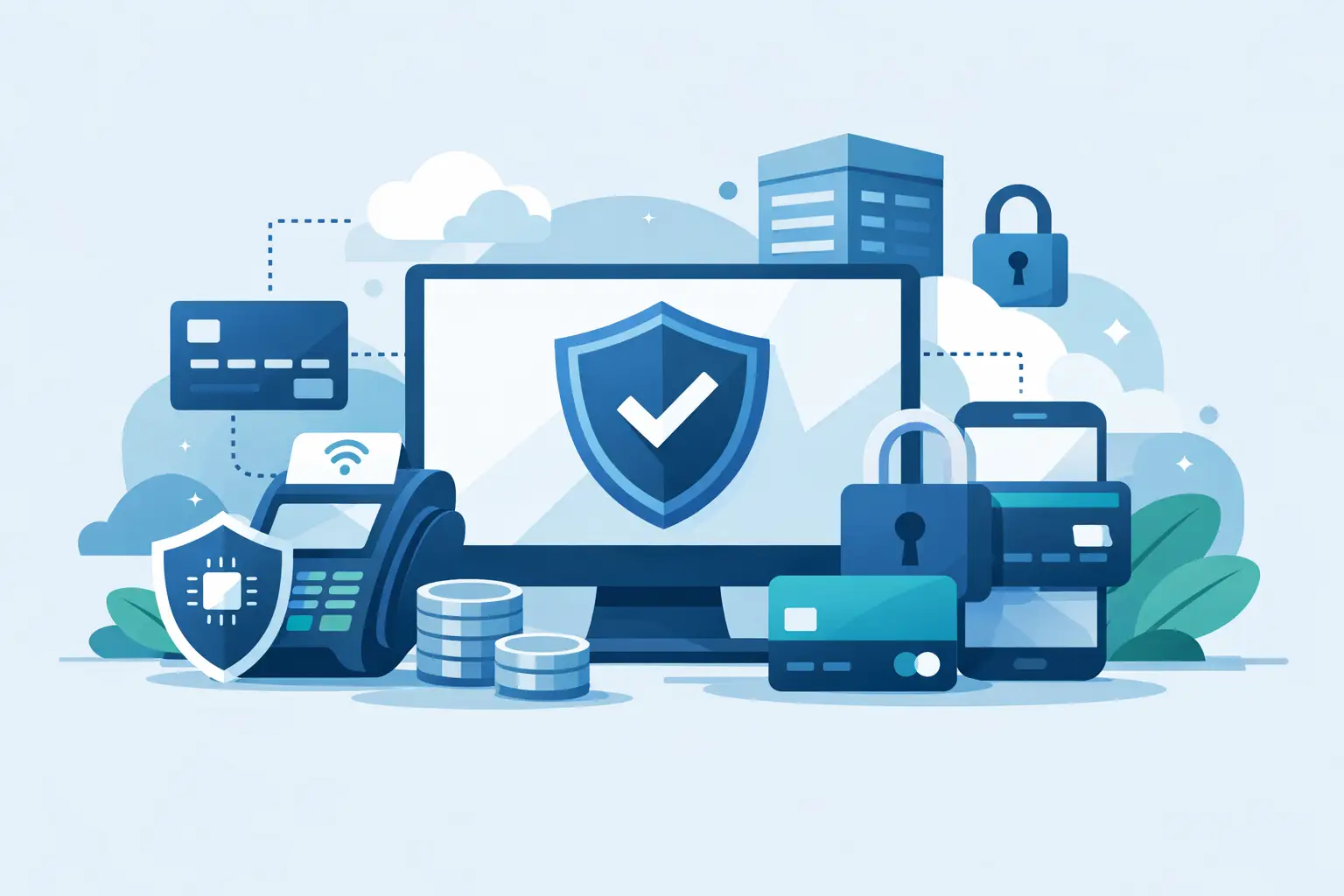
A PCI DSS Level 1 payment gateway is more than a compliance badge on a supplier checklist. For merchants processing card payments across markets, it is a critical control point between a customer entering payment details and a transaction being authorised, routed, monitored and settled. The right gateway reduces exposure to sensitive card data while giving payment teams the flexibility to improve approval rates, manage fraud and maintain checkout performance as the business grows.
For regulated, high-risk and international merchants, that distinction matters. Payment acceptance cannot be treated as a single connection to a single acquirer. It requires dependable infrastructure, configurable controls and practical support when issuer behaviour, fraud patterns or local payment preferences affect revenue.
What PCI DSS Level 1 means for a payment gateway
PCI DSS is the Payment Card Industry Data Security Standard, a set of requirements designed to protect payment account data. Level 1 is the highest validation level and applies to service providers that handle significant volumes of card transactions or provide services that can affect the security of cardholder data.
A PCI DSS Level 1 payment gateway undergoes a demanding annual assessment by a qualified security assessor, supported by regular security testing and compliance reporting. Its environment must meet stringent requirements covering network security, access control, vulnerability management, monitoring, encryption and incident response.
For a merchant, this provides an essential layer of assurance. The gateway is responsible for protecting the payment infrastructure it operates, including the systems that capture, transmit and process card data within its scope. It also demonstrates that security is managed as an ongoing operational discipline, rather than a one-off technical exercise.
However, gateway certification does not automatically make a merchant PCI compliant. Each business remains responsible for its own systems, processes and payment-data scope. The commercial advantage lies in choosing an integration model that keeps sensitive data away from the merchant’s servers wherever possible, reducing the systems that must be secured and assessed.
Reduce card-data exposure at checkout
How card details enter your payment flow has a direct impact on your PCI scope. A fully integrated card form hosted on a merchant’s own server can offer maximum design control, but it also creates greater responsibility for the environment handling payment data. For many businesses, that trade-off is unnecessary.
Hosted payment pages, hosted payment fields and tokenisation can substantially reduce exposure. Card data is entered into a gateway-controlled environment or securely transmitted directly to it, while the merchant receives a token that can be used for later payments, refunds, recurring billing or customer account updates. This supports a branded checkout experience without storing raw card data in internal platforms.
The correct approach depends on the customer journey. A travel business may require pre-authorisations, delayed capture and incremental charges. A subscription provider needs stored credentials, clear billing logic and reliable retries after a failed renewal. An online gaming operator may require deposit limits, geographic controls and fast risk decisions. Gateway infrastructure should accommodate these requirements without forcing sensitive payment data through unnecessary systems.
Security should improve conversion, not add friction
Security controls are sometimes treated as a cost of doing business. In practice, well-configured controls can protect revenue as well as payment data. The objective is not simply to reject more transactions. It is to identify genuine high-risk activity while allowing legitimate customers to complete payment with minimal interruption.
3D Secure v2 is a good example. It can provide stronger authentication and liability-shift benefits, particularly where strong customer authentication applies, but a poorly configured challenge flow can damage conversion. A payment gateway should support dynamic 3D Secure rules based on factors such as transaction value, device signals, payment history, country, fraud score and applicable exemptions.
Tokenisation also supports both security and performance. Network tokens can improve authorisation resilience when cards are reissued or updated, helping recurring payments continue with fewer avoidable declines. Meanwhile, intelligent retry logic can reattempt a failed payment only when the response code and timing indicate a realistic prospect of approval. Repeatedly retrying every decline is not a recovery strategy – it can create issuer distrust and higher operating costs.
Fraud tools need the same level of precision. Velocity checks, IP and device intelligence, BIN controls, blacklists, address checks and transaction scoring should be configurable by merchant, country, payment method and customer profile. A rule that is appropriate for a first-time card payment may be unsuitable for a known subscriber with a strong payment history.
The gateway is also a routing and resilience layer
For merchants operating in several territories, the gateway should be judged on more than its PCI status. Security is the foundation, but routing capability determines how effectively the payment stack performs when acquirer preferences, issuer response patterns and local payment methods differ by market.
A single-acquirer setup can be straightforward at launch. It can also create concentration risk. If an acquirer experiences disruption, changes its risk appetite or delivers weak approval rates in a particular corridor, merchants may have limited room to respond. A gateway with orchestration capabilities can connect multiple acquirers and payment service providers through one integration, allowing transaction routing to be governed by practical rules.
Those rules may consider card scheme, BIN country, currency, transaction value, merchant category, historical approval performance or acquirer availability. The purpose is not to route every transaction to the cheapest option. It is to balance approval rates, processing costs, risk tolerance and settlement needs for each payment flow.
This is especially relevant for high-risk sectors. Acquiring access may vary substantially by geography and product type, while chargeback thresholds can change the economics of an entire programme. A capable payments partner helps merchants select appropriate acquiring relationships, monitor portfolio health and maintain fallback options before a problem becomes a revenue interruption.
What to assess beyond the compliance certificate
A Level 1 certificate confirms a high standard of payment-security practice, but procurement and technical teams should assess the operating model around it. Ask how the gateway isolates card data, which integration options are available and how tokens are managed across channels. Establish whether recurring transactions, refunds, partial captures, account updater services and payment links are handled within the same platform.
It is also worth examining the gateway’s visibility and support model. Payment managers need clear reporting on authorisation rates, declines, fraud outcomes, chargebacks and acquirer performance. Technical teams need reliable APIs, webhooks, testing environments and actionable error messages. When a payment flow fails, a generic decline code is rarely enough to diagnose whether the issue sits with the customer, issuer, acquirer, integration or risk rule.
For cross-border businesses, payment method coverage matters alongside card acceptance. Customers may prefer wallets, bank-based methods or local alternative payments, and those preferences can materially affect conversion. Adding methods without operational control can create reconciliation complexity, however. The platform should provide a consistent view of transaction status, settlements, refunds and disputes across channels.
Finally, assess how quickly the provider can support change. New territories, a new legal entity, an additional merchant account or a sudden increase in fraud often require more than a configuration guide. Merchants benefit from hands-on payments expertise that connects technical implementation with acquiring strategy and day-to-day risk management.
Build a payment architecture that can adapt
The strongest payment programmes separate the concerns that should be flexible from those that must remain protected. Customer-facing checkout should be optimised for clarity and speed. Sensitive card data should stay within tightly controlled, PCI-compliant systems. Routing, authentication and fraud rules should be adjustable as markets, customer behaviour and issuer requirements change.
AllSecure brings these capabilities together through Level 1 payment infrastructure, multi-acquirer connectivity, alternative payment methods and configurable risk controls. For merchants that need to expand across currencies and regions, a single platform can reduce integration overhead while retaining the ability to tailor payment flows to commercial and regulatory realities.
A payment gateway should not merely pass transactions from checkout to acquirer. It should give the business a secure, measurable and adaptable foundation for accepting more legitimate payments. Start with PCI DSS Level 1 security, then choose the integration, routing and support model that lets your payment operation keep pace with your growth.
Related Articles