09 Sep
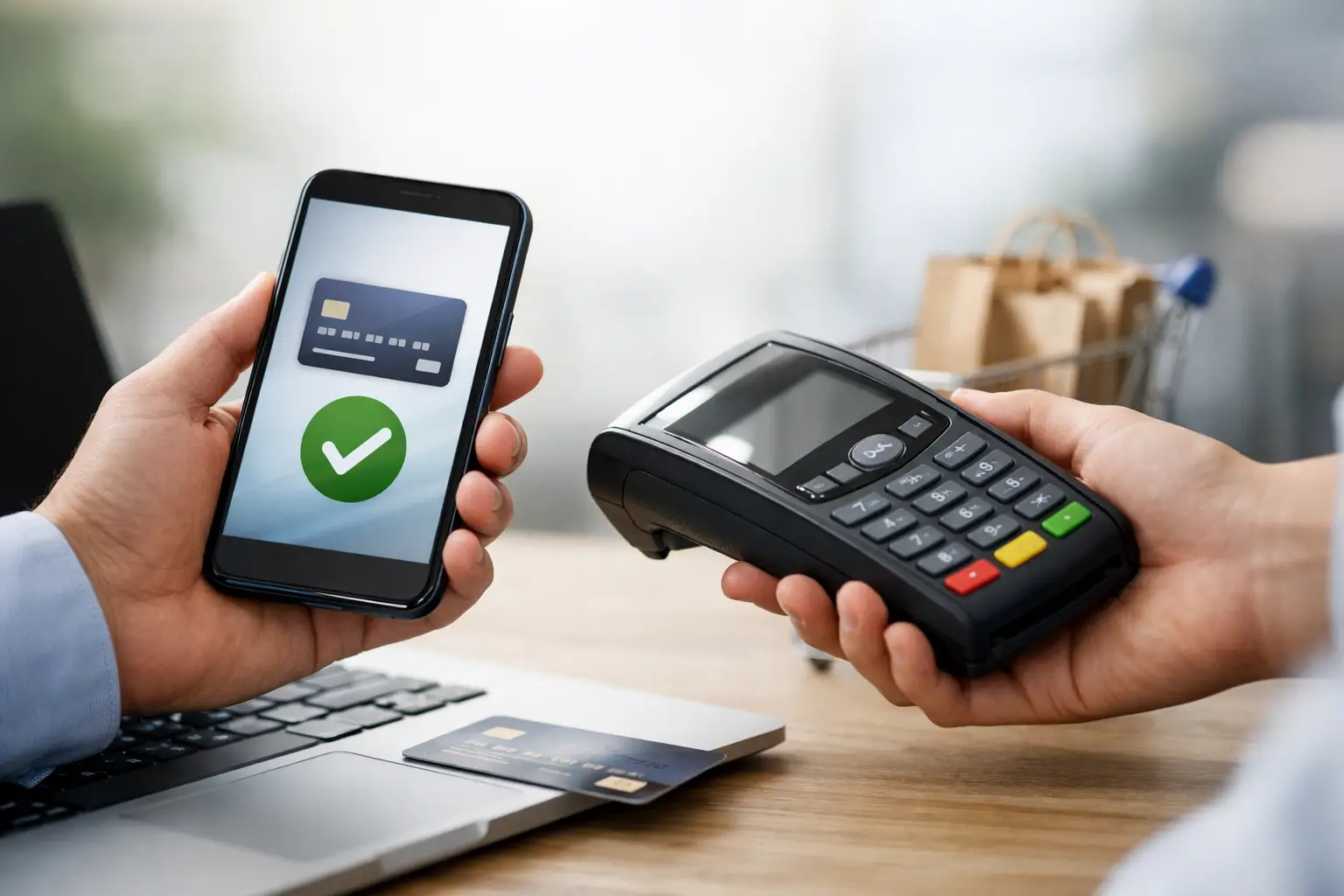
A customer has selected a product, entered their card details and reached the final click. At this point, a declined payment is not merely a technical event. It is lost revenue, higher acquisition costs and, in many cases, a customer who will not return. To improve payment approvals, merchants need to treat payment acceptance as an active commercial discipline rather than a fixed gateway setting.
The strongest results rarely come from one change alone. Approval rates are shaped by issuer decisions, acquiring relationships, fraud rules, checkout design, transaction data and the payment methods available in each market. The objective is not to approve every transaction. It is to maximise approvals from legitimate customers while preventing fraud, controlling chargebacks and maintaining compliance.
Start with the payment data, not assumptions
A single headline approval rate can hide the source of the problem. An apparent decline issue may be concentrated in one issuer, country, card scheme, currency, customer segment or payment flow. Equally, a high overall approval rate may conceal poor performance on the transactions that matter most, such as first subscription payments or high-value travel bookings.
Review authorisation results by payment method, issuer country, acquiring bank, decline code, device, currency and transaction type. Separate soft declines, where a transaction may succeed after a legitimate retry or different authentication path, from hard declines such as an invalid account or a permanently closed card. Treating both in the same way wastes revenue and can create unnecessary issuer friction.
The most useful payment reporting also follows the full journey. A transaction may be authorised but fail to convert because the customer abandons a 3D Secure challenge, times out during redirection or encounters an unclear error message. Payment approval optimisation therefore needs to measure authorisation, authentication completion and final successful sale as connected stages.
Four signals deserve regular attention:
- Approval rates by acquirer, issuer country and card scheme
- The proportion of soft versus hard declines
- 3D Secure v2 frictionless and challenge completion rates
- Fraud, chargeback and refund trends alongside approval growth
If approval rates rise while fraud losses or chargebacks increase sharply, the configuration is not working. Sustainable growth depends on the quality of accepted transactions, not volume alone.
Improve payment approvals with smarter routing
One acquirer does not perform equally well for every transaction. Local issuer relationships, supported currencies, merchant category acceptance, risk appetite and processing performance all influence the result. This matters especially for international merchants and regulated or high-risk sectors, where a single acquiring route may be too restrictive or commercially inefficient.
Payment orchestration enables merchants to route transactions according to meaningful rules. A transaction from a particular region can be sent to an acquirer with stronger local issuer performance. A recurring payment can follow a route designed for stored credentials. Transactions above a set value, or those carrying specific risk indicators, can be directed to an acquiring partner equipped to assess them appropriately.
Routing should not become random traffic distribution. Sending a declined transaction repeatedly through different processors can increase costs, create duplicate authorisations and harm issuer confidence. Instead, use tested routing logic based on real approval performance, with clear limits for retries and fallback paths.
For many businesses, a primary and secondary acquirer model is the practical starting point. More sophisticated merchants may require dynamic routing based on BIN ranges, currency, country, payment type or historical issuer outcomes. The right model depends on transaction volumes, geographic footprint and operational capacity to monitor results.
Send issuers the data they need to approve
Issuers assess more than the card number and available balance. Incomplete, inconsistent or poorly formatted transaction data can make a genuine customer look uncertain. Better data does not guarantee an approval, but it gives the issuer a stronger basis for making the right decision.
Use accurate billing details, clear merchant descriptors and consistent customer information across the checkout and payment request. A customer who does not recognise the descriptor on their bank statement is more likely to dispute a valid payment later. For digital, travel, hospitality and subscription businesses, supporting information such as itinerary details, service dates or recurring payment indicators can be particularly relevant.
Network tokenisation can also improve payment continuity and security. Tokens reduce exposure to raw card data and can remain current when an underlying card is replaced or renewed, depending on network and issuer support. This is valuable for recurring billing, where involuntary churn caused by expired cards can be a material source of lost revenue.
For card-on-file payments, ensure the transaction is correctly identified as a customer-initiated or merchant-initiated transaction. Stored credential frameworks and properly recorded consent are not administrative details. They help acquirers, schemes and issuers interpret recurring and follow-on payments correctly.
Make 3D Secure v2 work for genuine customers
Strong Customer Authentication is a necessary part of many European payment flows, but an unnecessary challenge can cost a sale. The practical aim is to provide richer risk data so issuers can approve low-risk transactions frictionlessly, while presenting a challenge when it is genuinely needed.
Pass the available 3D Secure v2 data fields accurately, including device, browser and customer account information where appropriate and lawfully collected. This improves the issuer’s view of the transaction and can reduce avoidable challenges. A poorly implemented authentication flow, by contrast, can create failed redirects, confusing screens and customer drop-off.
Exemptions may be available in suitable cases, such as low-value transactions, recurring payments or transactions covered by a trusted beneficiary relationship. However, their use depends on the merchant, acquirer, issuer and transaction context. An exemption request is not an automatic approval, and aggressive exemption strategies can undermine risk performance. Monitor outcomes by exemption type and adjust based on evidence.
Align fraud controls with conversion goals
Overly broad fraud rules often produce a deceptively clean fraud dashboard at the expense of declined legitimate customers. Rules that automatically block all foreign cards, new customers, VPN users or higher-value orders may feel safe, but they can reject valuable buyers in exactly the markets a merchant is trying to grow.
A more effective approach layers controls. Device intelligence, velocity checks, behavioural signals, transaction history, negative lists and 3D Secure results each provide part of the picture. Configure rules differently by product type, payment method, geography and customer lifecycle. A repeat subscriber with successful history should not necessarily face the same treatment as an anonymous first-time transaction.
Manual review can be useful for high-value or complex orders, but it is not a substitute for well-tuned automated controls. Review queues introduce delays, and delayed fulfilment can be damaging for time-sensitive bookings or digital services. The best use of review is targeted: reserve it for transactions where the potential revenue justifies the operational cost and the available evidence is genuinely inconclusive.
Reduce checkout friction before the authorisation request
Payment performance begins before the gateway receives a transaction. Long forms, forced account creation, unclear delivery costs and limited payment choice all increase abandonment. Some customers never reach authorisation at all.
Keep checkout fields proportionate to the purchase, display total costs early and make errors specific. If a card is declined, do not simply show a generic failure message. Give the customer a clear next step: check details, try another card, choose a local payment method or contact their bank where appropriate. Do not expose sensitive issuer information or imply that a retry will definitely succeed.
Payment method choice also has a direct effect on conversion. Cards remain essential, but customers in different markets may prefer bank payments, digital wallets or other local methods. Adding every possible method is not automatically beneficial, as more options create integration and reconciliation overhead. Prioritise methods with demonstrable demand in the markets and customer groups that matter to your business.
Treat optimisation as an ongoing payment programme
Issuers change risk models, acquirers adjust policies and customer behaviour moves between channels and devices. A routing decision or fraud rule that worked six months ago may now be limiting growth. Payment approval optimisation needs a regular operating rhythm: review decline patterns, test changes in controlled stages and assess revenue, fraud and chargeback outcomes together.
Technical teams need reliable APIs, webhooks and clear error handling. Finance and operations teams need transparent reconciliation, settlement visibility and actionable reporting. Payment managers need an acquiring strategy that can adapt as markets, products and risk profiles evolve. When these functions work from the same payment data, improvements are easier to identify and safer to deploy.
For merchants with complex payment acceptance requirements, specialist support can shorten the path from a decline pattern to a practical fix. AllSecure combines gateway technology, acquiring access and configurable risk controls so merchants can test smarter payment flows without losing control of security or operational visibility.
The next approval improvement may be hidden in a single issuer range, an outdated retry rule or an authentication journey that asks too much of good customers. Find that point of friction, measure the commercial impact and make the change with fraud and chargeback performance firmly in view.
Related Articles