09 Oct
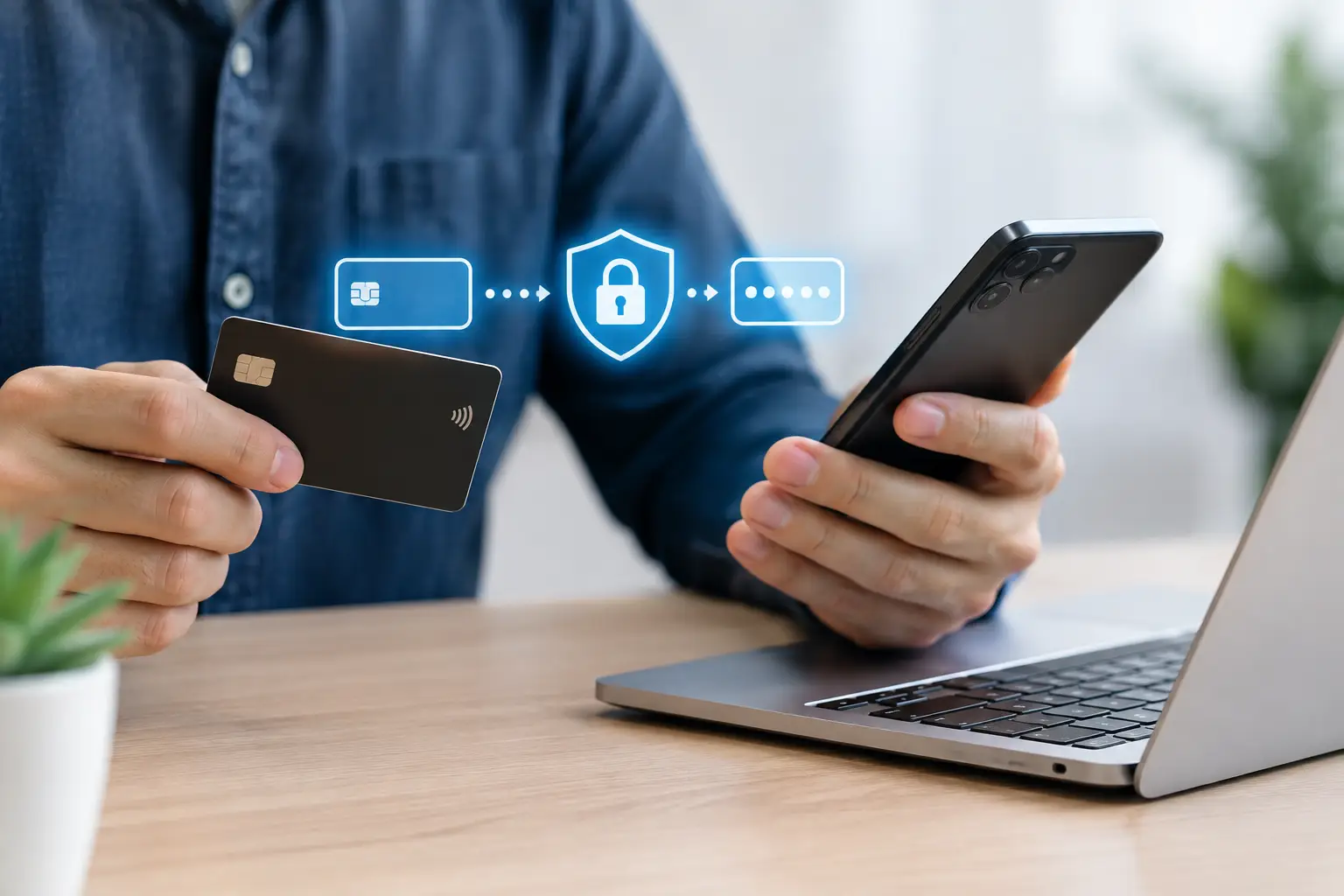
A returning customer should not need to re-enter their card number, and your business should not need to retain it to take the next payment. Knowing how to tokenise card data lets merchants replace sensitive card details with a controlled reference that can be used for repeat purchases, subscriptions, refunds and other approved payment actions.
For businesses processing online payments at scale, tokenisation is more than a security feature. It reduces exposure to cardholder data, supports lower-friction checkout and creates a practical foundation for recurring billing. The design matters, however. A poorly chosen token model can create unnecessary PCI obligations, restrict processor flexibility or cause failures when a customer’s card is replaced.
What card data tokenisation actually does
Card tokenisation replaces a primary account number, or PAN, with a token: a value that has no usable payment value outside the payment environment that issued it. Your application stores and sends the token rather than the full card number. The payment gateway or token provider maintains the protected relationship between the token and the underlying card data.
For example, when a customer enters a card at checkout, the gateway can collect the details through hosted payment fields. The card number is sent directly to the gateway’s PCI DSS Level 1 environment. Your checkout receives a token such as `tok_8F2…`, which it can associate with the customer, order or subscription in your own systems.
The token is not a substitute for every payment credential. Card verification values must never be stored after authorisation, including in tokenised form. Depending on the transaction, you may also need to retain evidence of customer consent, transaction references and 3D Secure authentication outcomes. Those records support operations and dispute handling without exposing card data.
How to tokenise card data without expanding your PCI scope
The safest approach is to prevent card data from passing through your servers in the first place. That principle should shape the integration, data model and operational process.
1. Choose where card details are collected
Hosted payment pages are often the quickest route to a compliant implementation. The customer is redirected to, or presented with, a gateway-managed checkout where card fields are handled within the provider’s controlled environment.
For a more branded checkout, hosted fields or an embedded payment component can keep card entry on your payment page while isolating the card inputs from your application. The customer sees a consistent experience, but card data is posted directly to the gateway. This is particularly useful for merchants looking to protect conversion without taking on the complexity of handling raw PAN data.
A direct API integration can be appropriate for businesses with a mature PCI programme and a clear operational reason to handle card data. It is not the default choice simply because it appears more flexible. If raw card details touch your servers, logs, support tools or analytics systems, your PCI DSS scope and risk increase substantially.
2. Create the token during the first approved interaction
Token creation should normally occur when a customer completes their first card payment or explicitly saves a card for future use. The gateway returns a token after securely receiving the card data. Your platform then stores only the token, together with non-sensitive display details such as card brand, masked digits and expiry month and year where permitted.
For saved cards and subscriptions, obtain clear customer agreement for the future payment arrangement. Record whether later charges are customer-initiated or merchant-initiated, the agreed frequency or trigger, and the original transaction reference where required. This is commercially important as well as compliant: recurring payment disputes often begin with unclear billing expectations rather than a technical failure.
3. Store tokens as payment credentials, not as general identifiers
A token should be linked to the right customer and payment context. Avoid treating it as a universal customer ID or exposing it unnecessarily in browser code, URLs, exports and support communications.
Apply access controls to token-management functions. Staff may need to view masked card information or initiate a refund, but they should not automatically be able to charge a stored credential, change the billing relationship or export token records. Audit trails for payment actions are essential, especially in high-risk and regulated sectors.
4. Charge the token through the right transaction flow
When the customer returns, your system submits the stored token to the gateway rather than the PAN. The gateway retrieves the underlying credential within its secure environment and sends the authorisation request to the relevant acquirer.
The transaction still requires fraud controls. A token does not guarantee an approval, remove the need for velocity rules or make a merchant-initiated transaction exempt from scheme requirements. Use device data, behavioural signals, billing history, country and issuer responses to determine when to challenge, retry or route a payment differently.
5. Manage the token lifecycle
Cards expire, are renewed, become compromised or are reissued. A tokenisation strategy must account for these events rather than waiting for subscription payments to fail.
Gateway tokens may remain valid only while the original relationship with that gateway or acquirer exists. Network tokens, issued through card schemes, can offer stronger lifecycle management because they may be updated when underlying card details change. They can also use transaction-specific cryptograms that provide additional protection during authorisation.
The exact benefit depends on your acquiring setup, card scheme support and transaction type. For subscription, travel and other repeat-payment models, network tokenisation can improve continuity and approval performance. It should be tested by market, issuer and payment flow rather than assumed to solve every decline.
Gateway tokens and network tokens are not the same
A gateway token is commonly a reference created and controlled by a payment service provider. It is efficient for storing a card securely and reusing it within that provider’s platform. It can be an excellent fit for a merchant using one gateway and a defined acquiring arrangement.
A network token is provisioned through a card scheme and is designed for a specific merchant or token requestor. It can be used with supporting acquirers and may benefit from automatic credential updates and enhanced authorisation data. In practice, the payment gateway coordinates the technical process so the merchant does not need to manage scheme-level token provisioning directly.
The trade-off is portability. Before committing to a token solution, ask what happens if you add another acquirer, change PSPs, expand into new territories or need to maintain a multi-processor setup. Some tokens cannot be transferred outside the issuing platform. Others can support broader routing, subject to commercial agreements, scheme rules and technical capability.
For international merchants, this question affects more than future flexibility. It can determine whether you can route transactions to the acquirer best placed for a particular market, currency, card brand or risk profile without forcing returning customers to enter their details again.
Build tokenisation into your payment operations
A sound implementation connects tokenisation to the full payment lifecycle. Your team should define how tokens are created, referenced in orders, used for subscription rebills, deleted when no longer needed and reconciled against gateway reports. Webhooks should update your platform when a payment succeeds, fails, is refunded or requires customer action, rather than relying on a browser return alone.
Test failure paths as thoroughly as the happy path. Check what happens when a customer closes the checkout window, authentication is abandoned, a token is invalid, a card is replaced, a recurring payment is declined or a refund is requested months after the original purchase. For merchants with several processors, test that routing decisions preserve the correct token and transaction metadata.
Monitor approval rates separately for first-time and tokenised transactions. A fall in repeat-payment approvals may signal expired credentials, incorrect merchant-initiated transaction indicators, weak retry logic or an acquirer configuration issue. The answer is not always to retry more often. Excessive retries can increase issuer suspicion, customer complaints and chargeback exposure.
Common mistakes that create avoidable risk
The most damaging error is collecting card data in a form that posts through your own server when hosted fields would meet the business requirement. Other frequent problems include logging request payloads, storing CVV values, treating tokenisation as a replacement for fraud prevention and assuming a token can be moved freely between providers.
Another mistake is building recurring billing without a clear consent and cancellation process. Tokenisation makes repeat payments technically straightforward; it does not make unclear billing terms acceptable. Make renewal dates, amounts, cancellation routes and descriptor information easy for customers to understand. This protects retention as well as dispute rates.
For complex payment estates, work with a provider that can align secure token collection, acquiring access, 3D Secure v2, fraud controls and routing rules in one operating model. AllSecure helps merchants configure these payment flows around their markets, risk requirements and growth plans.
Tokenisation works best when it is treated as a commercial control as well as a security control: customers get a faster return journey, teams hold less sensitive data, and your business keeps more options open as payment volumes and markets grow.
Related Articles