13 Aug
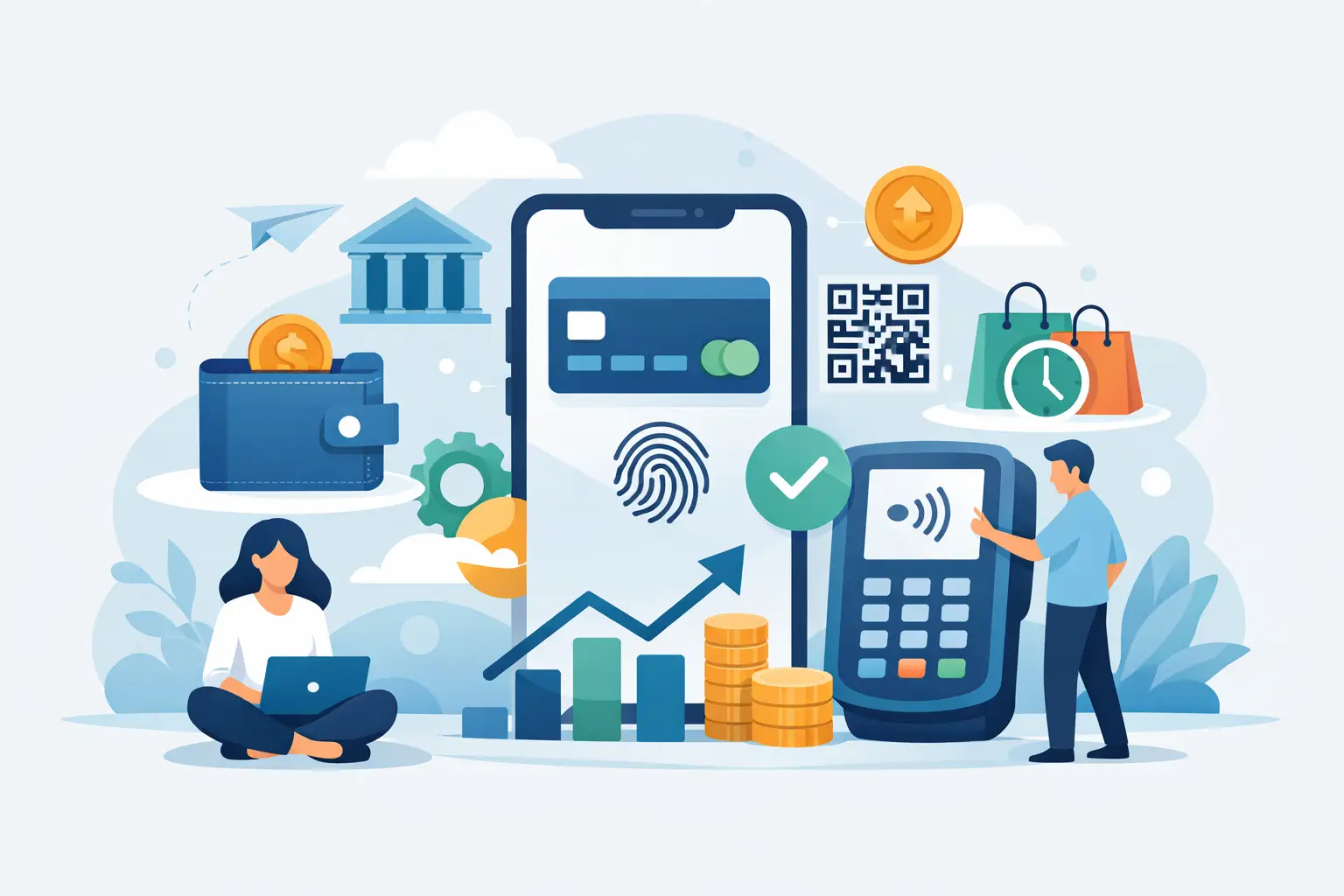
A customer reaches the final checkout step, sees only an unfamiliar card option and leaves. For a merchant, that is not simply abandoned basket value. It is evidence that the payment experience does not match how that customer expects to pay. Alternative payment methods give international e-commerce businesses a practical way to close that gap while improving conversion, approval rates and customer confidence.
For merchants operating across multiple markets, cards remain essential but cannot be the entire payment strategy. Bank transfers, digital wallets, mobile payment options and pay-by-bank services may be the default choice for a significant share of customers in particular territories. The right mix depends on where you sell, what you sell, the value of each transaction and how your customers pay repeatedly.
What are alternative payment methods?
Alternative payment methods are payment options outside traditional debit and credit card processing. They include local bank payment schemes, digital wallets, account-to-account payments, mobile wallets, prepaid options, cash-based vouchers and buy now, pay later services.
The category is broad because payment habits are local. A wallet with strong adoption in one country may have limited recognition in the next. Some customers prefer a familiar bank authentication journey; others want a stored wallet credential or a payment method that does not require a card at all.
For a merchant, the commercial question is not whether to add every available method. It is whether a payment option gives a meaningful group of genuine customers a faster, more trusted route to a successful purchase.
Why alternative payment methods affect conversion
Checkout is where product, pricing, trust and payment infrastructure meet. If customers cannot see their preferred method, they may abandon without attempting to pay. If a method is present but loads slowly, redirects poorly or fails during authentication, the same result follows.
Alternative payment methods can improve conversion because they reduce hesitation. Customers recognise a familiar local brand, understand the authentication process and may not need to find a card or enter card details. This is particularly relevant on mobile, where long form entry creates friction and wallet or bank-based authentication can be materially quicker.
They can also broaden acceptance. Card declines occur for many reasons, from issuer risk rules and insufficient funds to expired credentials or cross-border restrictions. A suitable non-card option gives a customer another way to complete the transaction rather than ending the payment journey at the first decline.
That does not mean every method will improve results. A poorly chosen option can complicate checkout, increase reconciliation work or attract a payment profile that does not suit the business. The objective is a relevant, well-configured payment portfolio, not an overcrowded payment page.
The main types of alternative payment methods
Different payment types solve different commercial problems. Understanding their operating model matters before they are added to a checkout.
Digital wallets
Digital wallets let customers pay with stored credentials, often protected by device authentication. They are particularly effective for mobile commerce and repeat purchasing because they reduce manual data entry. Tokenised wallet payments can also support stronger security and reduce exposure to raw card data.
Wallet adoption varies by region and customer demographic. They are often a high-priority option where mobile traffic is dominant, average order values are moderate and speed at checkout has a direct impact on conversion.
Bank transfers and pay-by-bank
Account-to-account payments move funds directly from the customer’s bank account, usually through an authenticated bank journey. Depending on the scheme and market, they can provide cost efficiency, strong customer authentication and a payment process customers already trust.
The operational detail matters. Merchants should understand whether payment confirmation is immediate, whether funds can be recalled, how refunds work and what the settlement timetable looks like. These factors are especially important for travel, hospitality, digital services and other sectors where fulfilment timing affects risk.
Local payment methods
Local methods are country or region-specific options built around established banking, wallet or cash-payment behaviour. Their value comes from customer familiarity. In markets where a local scheme has deep adoption, offering only international cards can make a checkout feel incomplete.
Local methods can be highly effective for cross-border expansion, but they require more than a logo on the payment page. The merchant needs appropriate currency handling, clear customer messaging, payment-status logic and refund processes that work with the method’s rules.
Buy now, pay later and instalments
Deferred payment and instalment services can support conversion where customers value payment flexibility, particularly for higher-value purchases. They may also help merchants improve average order value, although outcomes vary considerably by product category and customer base.
These services require careful assessment. Fees, merchant liability, approval logic, refund handling and regulatory obligations must be understood before launch. For regulated or high-risk merchants, availability may be restricted, so acquiring and payment expertise is essential during selection.
Prepaid, voucher and cash-based options
Prepaid and voucher-based methods can serve customers who do not wish to use cards or bank accounts online. They may be relevant in markets with lower card penetration or for businesses seeking to reach customers who prefer controlled spending.
However, these methods may involve delayed confirmation, limited refund mechanisms or more complex customer support. Their role should be defined by customer demand, not assumed as a universal conversion tool.
How to choose the right alternative payment methods
Start with evidence from your own payment data. Review where customers are located, which devices they use, how often card payments decline and where abandonment rises in the checkout flow. A method that is valuable in one country, channel or customer segment may add little elsewhere.
A practical assessment should examine five areas:
- customer demand and established local payment behaviour;
- approval performance, authentication flow and likely impact on checkout completion;
- settlement speed, fees, refunds, disputes and reconciliation requirements;
- regulatory, licensing and acquiring eligibility for your sector and territories; and
- integration effort, including how the method fits recurring billing, subscriptions and existing payment logic.
For subscription businesses, recurring capability is often decisive. Not all alternative methods support merchant-initiated payments or recurring billing in the same way as card credentials. A payment method that performs well for an initial purchase may be unsuitable for ongoing collection unless it supports a clear mandate or reauthorisation model.
For high-risk sectors, risk and acquiring compatibility should be addressed first. A preferred local method is not commercially useful if the provider, acquiring bank or scheme does not support the merchant’s category. The right payments partner can help align payment methods with available merchant accounts, risk controls and operational requirements before development begins.
Build payment choice without creating checkout friction
More options do not automatically create a better checkout. A long, unstructured list can make customers pause or select an unsuitable method. Payment presentation should be guided by country, currency, device, transaction value and known customer preferences.
For example, a customer in a supported market may see the leading local bank payment option and a relevant wallet near the top of the checkout, alongside cards. A returning customer can be shown their previously successful method where permitted. This approach keeps the experience focused while preserving choice.
Payment orchestration is valuable here. It allows merchants to manage multiple PSPs, acquirers and payment methods through a single integration layer, using routing rules that reflect commercial and risk priorities. If one route is unavailable or underperforming, intelligent routing can direct eligible transactions to another configured provider without forcing the customer to restart the checkout.
Hosted payment fields, payment links and API-led integrations each have a place. A hosted flow can reduce implementation effort and support PCI compliance, while an API integration offers more control over the customer journey. The appropriate model depends on internal technical resources, brand requirements and the complexity of the payment estate.
Protect conversion with security and control
A low-friction checkout must still be a controlled checkout. Fraudsters often exploit new payment routes, promotional offers and cross-border expansion before a merchant has tuned its risk settings. Payment methods should be launched with monitoring and clear operational ownership, not treated as a one-off integration project.
Use tools such as 3D Secure v2, network tokenisation where supported, velocity controls, device and behavioural signals, blocklist and allowlist rules, and real-time transaction monitoring. The right configuration should distinguish between genuine customers and high-risk activity as accurately as possible. Excessive declines damage revenue just as surely as fraud losses do.
Chargeback exposure also differs by method. Card payments may carry formal card-scheme dispute processes, while bank-based or wallet payments can have different return, refund or complaint paths. Finance and support teams need clear procedures for settlement matching, customer refunds and payment-status exceptions before volume scales.
Measure the commercial result
Track performance by market, method, device, issuer or provider route, transaction value and customer type. Approval rate alone is useful but incomplete. Review completed purchases, abandonment after method selection, fraud rates, refunds, chargebacks, processing costs and time to settlement.
Test changes carefully. Introducing a trusted local method in one territory may increase conversion, but placing it first for every customer could reduce performance elsewhere. Use controlled roll-outs, monitor results and refine payment-method ranking as customer behaviour becomes clearer.
The strongest payment strategy gives customers the ways they already trust to pay, while giving the merchant control over acceptance, risk and operational cost. Alternative payment methods are most valuable when they are selected with purpose, integrated cleanly and managed as a measurable part of revenue growth.
Related Articles