14 Sep

A customer reaches the payment page, enters card details and expects access within seconds. For an adult merchant, that moment carries more commercial risk than a standard retail checkout. An effective adult payment example must do more than collect a card payment: it must protect customer privacy, satisfy issuer authentication requirements, route transactions through suitable acquiring partners and create an auditable record for disputes.
The right design is not a single payment method or fraud rule. It is a connected flow that reduces unnecessary decline rates without weakening the controls that protect revenue.
Adult payment example: a subscription checkout in practice
Consider a legitimate, age-restricted digital subscription business selling access across the UK and Europe. A new customer selects a monthly plan priced at £29.99. They can pay by card, digital wallet or a locally relevant alternative payment method where available.
The checkout should present the final price, billing frequency, cancellation terms and merchant support contact before payment is submitted. These details reduce confusion later, especially where customers may not recognise a charge on their statement or may dispute a recurring transaction after forgetting they subscribed.
A well-configured payment flow would typically work as follows:
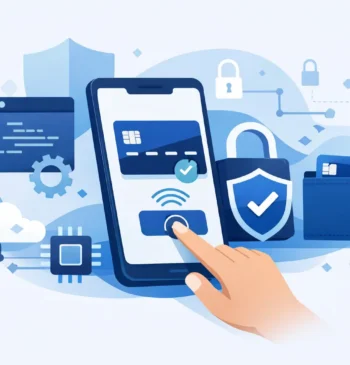
- The customer enters payment details through hosted payment fields or a hosted checkout page. Sensitive card data is handled within the payment environment rather than passing through the merchant’s own servers.
- The gateway performs initial validation, such as checking card format, expiry date, device signals and velocity rules. Obvious high-risk attempts can be stopped before they create unnecessary processing costs.
- The transaction is sent to the most suitable acquirer based on factors such as card type, cardholder country, currency, issuer behaviour and the acquirer’s acceptance performance for the merchant category.
- Where required, 3D Secure v2 is triggered to meet Strong Customer Authentication requirements. A frictionless authentication may be possible when the available transaction data supports a low-risk decision; otherwise, the customer completes a challenge with their bank.
- Once authorised, the customer receives confirmation and access is provisioned. The merchant stores a network token or gateway token, rather than card data, for future recurring payments.
This is a practical flow, not a guarantee that every payment will approve. A bank can still decline a legitimate transaction because of card limits, issuer policies or a customer setting. The objective is to distinguish avoidable friction from genuine risk, then give valid payments the best available path to approval.
Why adult payment acceptance needs a different approach
Adult merchants often operate under closer scrutiny from acquiring banks, card schemes and issuers. That does not make the sector unmanageable, but it does make generic payment configurations expensive. A processor that accepts the vertical may still have different risk tolerances, geographic strengths, reserve requirements and expectations for chargeback ratios.
The commercial effect appears at checkout. If the merchant uses one acquirer for every cardholder and every territory, a perfectly valid transaction may be routed to a partner that has a lower appetite for that issuer, region or transaction type. If the merchant applies overly blunt fraud rules, repeat customers and genuine first-time buyers can be declined alongside malicious attempts.
Payment infrastructure must also account for discretion. A clear, compliant billing descriptor helps customers recognise a charge without unnecessarily exposing sensitive information. It should align with the merchant’s legal entity and support channels, and be visible before purchase. Ambiguous descriptors may seem discreet, but they can lead to more disputes when customers do not connect the statement entry to the service they bought.
Build the checkout around approval, privacy and control
Start with an acquirer strategy, not just a gateway
The gateway is the technical layer that connects a checkout to payment providers, but acquiring access determines much of the acceptance outcome. Merchants should work with acquiring partners that explicitly support their business model, sales territories and recurring billing requirements.
This is particularly relevant where the business sells in multiple currencies or serves customers outside its domestic market. Local acquiring can improve issuer confidence in some markets, while multi-acquirer routing provides a contingency when one processor experiences an outage, reaches a limit or performs poorly for a particular payment segment.
An orchestration layer can apply routing rules automatically. For example, UK-issued Visa cards may be sent to one acquirer, while selected European Economic Area transactions are sent to another. The rule should be based on measured results, not assumptions. Routing every decline to a second acquirer can create duplicate attempts, higher costs and adverse scheme monitoring outcomes if it is not carefully controlled.
Apply 3D Secure v2 intelligently
For many European transactions, Strong Customer Authentication is a regulatory requirement. 3D Secure v2 supports that requirement while allowing richer data exchange between merchant, acquirer and issuer. Supplying accurate customer, device and transaction information can improve the likelihood of a frictionless approval.
The trade-off is clear. Too little authentication can result in soft declines, while invoking a challenge unnecessarily can increase abandonment. The goal is not to eliminate challenges at all costs. It is to use exemptions and risk-based authentication correctly, with a fallback that prompts the customer when the issuer requires it.
For recurring subscriptions, the initial customer-initiated payment should establish the payment credential and consent. Later merchant-initiated charges must be correctly flagged, tied to the agreed mandate and supported by clear customer communications. This supports continuity of service and makes disputes easier to investigate.
Use fraud controls that reflect real behaviour
Adult payment fraud is not solved by blocking every unfamiliar customer. A first purchase from a new device is normal. The risk rises when several signals point in the same direction: repeated attempts across multiple cards, unusual velocity, mismatched account data, proxy or device anomalies, or a pattern of low-value testing before a larger purchase.
Useful controls combine rule-based checks with real-time scoring. Set thresholds by country, product type, payment method and historical customer behaviour. A new subscription from a known high-risk pattern may require step-up authentication or manual review, whereas a returning customer using a tokenised credential may need less friction.
Review rules regularly. A fraud setting that was sensible during a card-testing attack may become a conversion barrier once the attack has stopped. Payment teams should measure false positives as seriously as confirmed fraud, because a wrongly declined customer is often lost permanently.
Protect recurring revenue after the first payment
The first approval is only the start for subscription businesses. Payment credentials expire, cards are replaced and customers may have insufficient funds on the renewal date. A strong recurring billing configuration uses tokenisation, account updater services where available and carefully timed retry logic.
Retries should be purposeful. A payment declined for insufficient funds may succeed after a short interval, while a stolen-card or do-not-honour pattern may need a different treatment. Repeatedly retrying an irrevocable decline can frustrate issuers and increase processing costs. Clear dunning messages can give genuine customers a simple way to update their payment method before access is interrupted.
Chargeback prevention also starts before renewal. Send reminders where appropriate, make cancellation straightforward and retain evidence of consent, service delivery and customer communications. When a dispute occurs, the operations team needs transaction data, authentication results, descriptor details and relevant customer records in one place.
Measure the payment flow, then refine it
Approval rate alone can mislead. A high approval rate achieved by declining too many transactions before authorisation may hide lost revenue. Monitor attempted payments, gateway declines, issuer declines, 3D Secure challenge rates, completion rates, fraud losses, chargebacks and subscription recovery by acquirer, issuer country and payment method.
Look for practical patterns. If one issuer group produces unusually high soft-decline rates, test a different routing path or authentication setting. If challenged transactions abandon at a high rate, inspect the checkout experience on mobile and the quality of data passed into 3D Secure. If chargebacks rise after a new offer launches, review the offer language, billing cadence and descriptor before simply tightening fraud rules.
AllSecure can support this kind of design through gateway integration, acquiring access, configurable risk management and routing across payment partners. The right configuration depends on the merchant’s legal model, customer locations, payment mix and risk profile.
A well-run adult checkout should feel simple to a legitimate customer and highly controlled to the teams responsible for revenue and risk. That balance is built through tested routing, transparent billing and payment data that turns every transaction into a better decision for the next one.
Related Articles